
What Is CNC Machining? Process, Types, Materials and Applications
CNC machining is widely used to make prototypes, custom components, and repeat-production parts that require controlled dimensions and reliable material performance. If you are evaluating the process for a new part, it helps to understand how CNC machining works, where it fits, and what affects cost and quality.
CNC machining is a computer-controlled subtractive manufacturing process that uses programmed machine tools to remove material from a workpiece and produce a finished part. CNC stands for Computer Numerical Control. The process is commonly used for custom components requiring dimensional accuracy, repeatability, complex geometry, or controlled surface features, and it can machine both metals and engineering plastics.
In this guide, we explain CNC machining from an engineering and purchasing perspective, including processes, materials, tolerances, design factors, costs, and supplier selection.
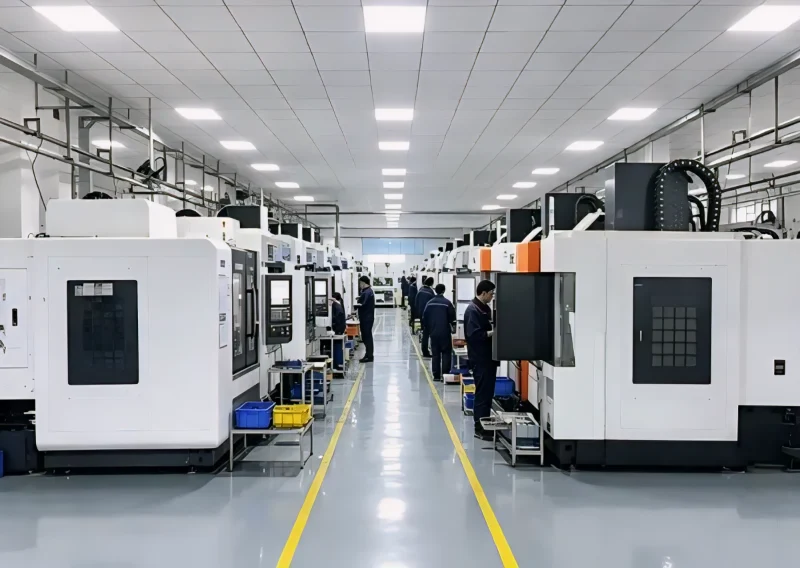
How Does CNC Machining Work?
CNC machining converts digital design information into controlled machine movements.
Instead of an operator manually controlling every cut, CNC equipment follows programmed instructions for tool position, movement, spindle speed, feed rate, and cutting depth.
A typical workflow includes CAD preparation, CAM programming, machine setup, material removal, and inspection.
1. CAD Design
The process usually starts with a 3D CAD model and, when required, a controlled 2D engineering drawing.
The CAD model defines geometry, while the drawing communicates requirements such as:
- Critical dimensions
- Tolerances
- GD&T
- Surface finish
- Threads
- Datum references
- Inspection notes
The drawing is particularly important when features affect assembly, sealing, alignment, motion, or other functional requirements.

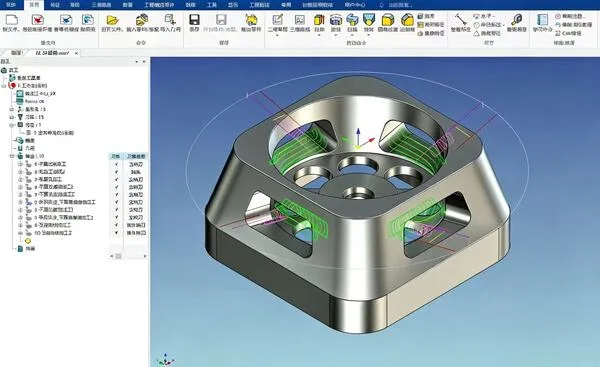
2. CAM Programming
CAD data is used to prepare CAM, or Computer-Aided Manufacturing, programming.
CAM software creates the toolpaths the CNC machine follows. Programming decisions can include tool selection, cutting strategy, feeds and speeds, roughing, finishing, hole-making operations, part orientation, and setup count.
The programmer must also consider tool access, cutting forces, vibration, chip removal, heat, accuracy, and cycle time.
3. Machine Setup and Workholding
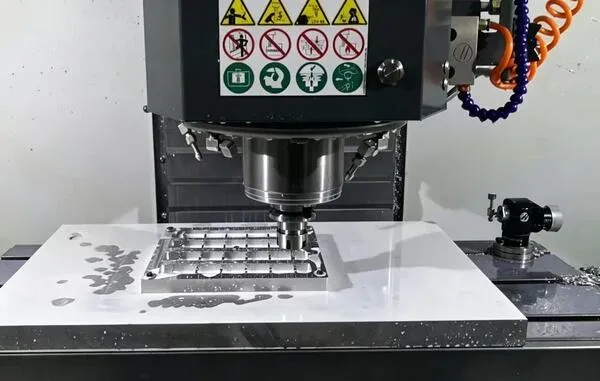
The workpiece must be held securely and referenced correctly before machining.
Workholding may use vises, soft jaws, chucks, collets, fixtures, vacuum systems, or custom tooling.
The setup affects part stability, datum consistency, repeatability, tool access, deformation, and the number of operations required. These factors become especially important for thin walls, tight geometric tolerances, and multi-operation components.
4. Material Removal
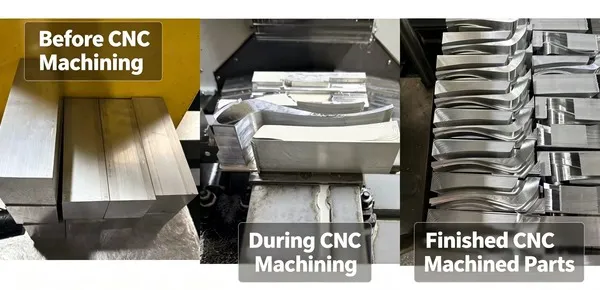
Once the setup is complete, cutting tools remove material until the programmed geometry is produced.
This is why CNC machining is a subtractive manufacturing process.
CNC milling generally uses rotating cutting tools, while CNC turning rotates the workpiece as a tool creates diameters, faces, bores, grooves, threads, and other rotational features.
Roughing removes material efficiently. Finishing operations bring critical features to their final dimensions and surface requirements.
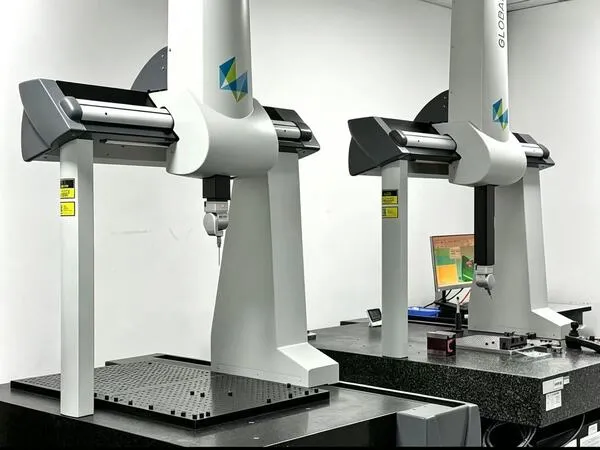
5. Inspection
Finished parts are checked against the applicable drawing and specifications.
Depending on the feature and tolerance, inspection equipment may include calipers, micrometers, bore gauges, thread gauges, height gauges, optical systems, or coordinate measuring machines.
Critical dimensions, GD&T requirements, and customer-specific documentation may require a more detailed inspection plan.
You can review our broader manufacturing capabilities at YCS Capabilities.
What Is the CNC Machining Process?
From a project and purchasing perspective, the CNC machining process includes more than machine movement.
A typical project may follow:
Drawing Review → DFM → Material Preparation → Programming → Setup → Machining → Inspection → Finishing → Packaging
Drawing and DFM Review
Before production, the supplier reviews the model, drawing, material, quantity, tolerances, finishing requirements, and inspection expectations.
Design for Manufacturability, or DFM, may identify deep pockets, thin walls, small internal radii, difficult tool access, complex datum structures, unnecessary tight tolerances, or features requiring extra setups.
Good DFM preserves functional requirements while identifying opportunities to improve manufacturability, consistency, lead time, or cost.
Process Planning and Machining
The supplier then develops the machining strategy.
Simple parts may require one setup and standard tooling. Complex parts may need several orientations, custom workholding, probing, or 5-axis machining.
Production can include roughing, finishing, drilling, boring, tapping, milling, and turning as required.
Final Inspection
Final inspection verifies that the completed part meets the agreed engineering requirements.
For buyers, this matters because a claim of “precision machining” is not the same as having a defined method to measure and document critical features.
What Are the Main Types of CNC Machining?
Most custom part projects rely on a few core CNC processes.
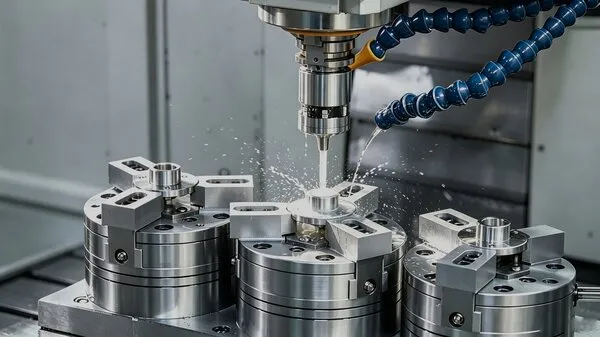
CNC Milling
CNC milling uses rotating cutting tools to remove material from a workpiece.
It can produce flat surfaces, pockets, slots, holes, threads, bosses, profiles, and complex surfaces.
Typical CNC-milled parts include housings, brackets, plates, covers, fixtures, and structural components.
Learn more about our CNC machining services.
CNC Turning
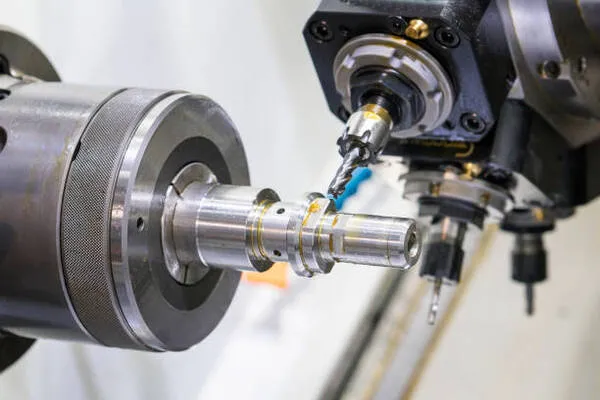
CNC turning normally rotates the workpiece while a cutting tool removes material.
It is especially suitable for rotational components such as shafts, pins, bushings, sleeves, spacers, and threaded parts.
Modern turning centers may also combine turning with drilling and milling, reducing separate setups for suitable components.
5-Axis CNC Machining
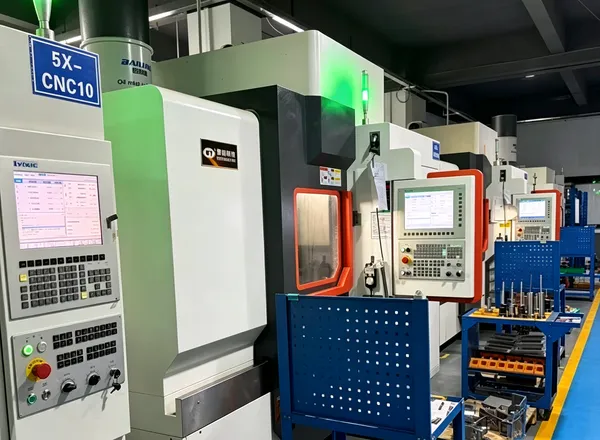
Five-axis CNC machining gives the cutting tool access to a workpiece from more directions.
It can be useful for parts with features on multiple faces, compound angles, complex surfaces, or geometry that would otherwise require repeated repositioning.
Reducing setups may also help preserve relationships between features.
However, 5-axis machining is not automatically the best choice for every part. Geometry, tolerance relationships, manufacturing strategy, and cost should determine the process.
See our 5-axis CNC machining capabilities.
EDM as a Supporting Process
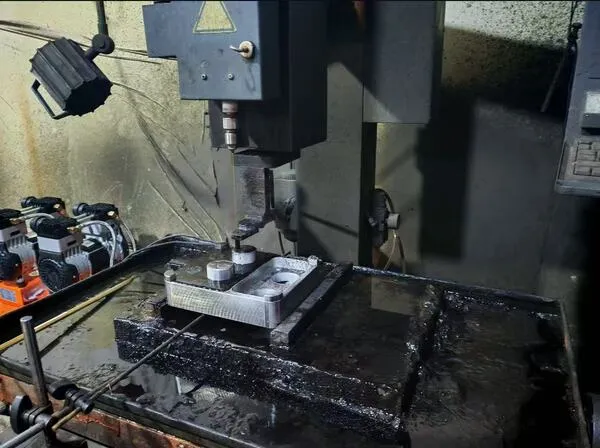
Electrical discharge machining, or EDM, can support CNC projects where conventional cutting tools cannot efficiently produce a feature.
Depending on the application, EDM may help with narrow features, difficult internal geometry, or hard materials. It is best viewed as a complementary process rather than another name for conventional CNC machining.
What Is CNC Machining Used For?
CNC machining is used to manufacture custom parts where geometry, dimensional control, repeatability, engineering material properties, or relatively low tooling requirements matter.
Prototypes and Engineering Development
CNC machining is widely used for functional prototypes because parts can be produced from the intended engineering material.
This allows teams to evaluate fit, assembly, mechanical performance, mounting locations, sealing surfaces, and dimensional relationships without first investing in dedicated production tooling.
Functional and Repeat-Production Parts
CNC machining can also produce end-use and repeat-production components when geometry, material, volume, cycle time, and quality requirements make the process appropriate.
Controlled programs, fixtures, tooling strategies, and inspection plans can support consistency across recurring orders.
For recurring production requirements, see our high-volume CNC machining capabilities.
Parts Requiring Controlled Features
CNC machining is particularly useful for components with functional features such as:
- Bearing fits
- Mating surfaces
- Hole locations
- Sealing interfaces
- Controlled bores
- Parallel or perpendicular surfaces
Tolerance requirements should be based on function rather than applying the tightest possible value to every dimension.
What Parts Are Suitable for CNC Machining?
CNC machining can produce many types of custom parts when the geometry, material, tolerance, and production volume suit a subtractive process.
Typical examples include:
- Housings and enclosures with pockets, mounting features, threads, or sealing surfaces
- Brackets and structural components with controlled holes, interfaces, and profiles
- Shafts, bushings, and pins suited to turning or combined turning and milling
- Thermal management components with mounting surfaces, channels, ports, or fluid interfaces
- Fixtures and tooling components used for manufacturing, assembly, or inspection
- Conductive and other custom components made from application-specific engineering materials
The manufacturing method should always be selected around the functional requirements of the part rather than the part name alone.
See representative machining and inspection work in our case studies.
What Materials Can Be CNC Machined?
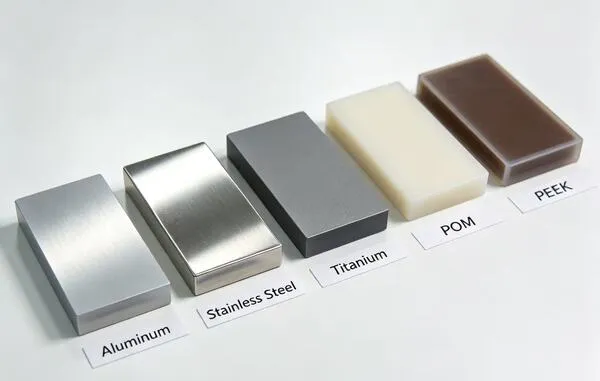
CNC machining can process a wide range of metals and engineering plastics.
Material choice affects cutting strategy, tool wear, heat generation, dimensional behavior, surface condition, and cost.
| Material | Key Advantage | Machining Consideration | Typical Part Types |
|---|---|---|---|
| Aluminum | Lightweight and machinable | Burrs and thin-wall stability | Housings, brackets |
| Stainless Steel | Corrosion resistance | Heat and tool wear | Structural and functional parts |
| Titanium | High strength-to-weight ratio | Heat concentration | High-performance components |
| POM | Low friction and good machinability | Thermal expansion | Bushings, guides |
| PEEK | High-performance engineering plastic | Heat and dimensional stability | Precision polymer components |
Aluminum
Aluminum is widely used for CNC machined parts because many alloys combine good machinability, relatively low density, and useful mechanical properties.
Common applications include housings, brackets, plates, fixtures, and thermal components.
Machining behavior still depends on alloy, temper, geometry, and process strategy.
Stainless Steel
Stainless steel is often selected where corrosion resistance, strength, durability, or appearance matters.
Compared with many aluminum alloys, it can involve higher cutting forces, more heat, and increased tool wear. Tooling, cutting parameters, coolant strategy, and workholding therefore become important.
Titanium
Titanium is valued for its high strength-to-weight ratio and performance in demanding applications.
It is more challenging to machine efficiently because heat can remain concentrated near the cutting zone. Tooling, cutting parameters, and process stability require careful control.
POM
POM is an engineering thermoplastic, not a metal.
It is commonly used where low friction, machinability, wear behavior, or dimensional stability is useful.
Heat, clamping force, and material movement must be considered differently from metal machining.
PEEK
PEEK is a high-performance engineering thermoplastic used where mechanical, thermal, chemical, or electrical properties are important.
Its raw material cost is relatively high, so material utilization and process planning may significantly affect project cost.
What Tolerances Can CNC Machining Achieve?
CNC machining tolerances depend on feature size, geometry, material, setup, tool access, thermal stability, machine capability and condition, and inspection method.
There is no single tolerance that accurately describes every feature on every machined part.
For suitable features and projects, YCS can support tolerances as tight as ±0.005 mm, depending on part geometry, material, machining process, and inspection requirements.
This should not be interpreted as a default tolerance for every dimension.
Why Is Tolerance Feature-Specific?
A short, rigid feature that can be machined and measured directly may be easier to control than a deep bore, long thin wall, flexible section, or difficult-to-access surface.
Feature size also matters. A tolerance practical for one feature may not be practical for another.
Engineers should therefore identify which dimensions are genuinely critical to function.
What Makes Tight Tolerances More Difficult?
Common factors include:
- Thin walls
- Deep pockets
- Long tool overhang
- Small tools
- Heat generation
- Material movement or stress relief
- Multiple setups
- Complex datum structures
- Limited inspection access
Tight tolerances may require additional finishing operations, tighter thermal control during machining and inspection, and more detailed measurement.
How Do Inspection Requirements Affect the Process?
If a dimension is critical enough to specify tightly, the supplier also needs a suitable method to verify it.
Measurement uncertainty, equipment capability, datum strategy, environmental conditions, and feature access can all affect the inspection approach.
Tight-tolerance machining and inspection planning should therefore be considered together.
Learn more about our inspection approach on the YCS Quality page.
What Design Factors Affect CNC Machining?
Good CNC part design balances function with tool access, part stability, inspection, and process efficiency.
Tool Access and Deep Features
A cutting tool must physically reach the feature being machined.
Deep pockets, narrow cavities, or hidden features may require longer tools, special tooling, extra setups, or another process. Long tool overhang also reduces rigidity and can increase vibration or deflection.
Thin Walls and Internal Radii
Thin sections can flex under cutting or clamping forces and may move after material removal.
Internal radii also affect tool choice. Very small radii may require smaller cutters, increasing machining time and reducing rigidity.
Where function allows, practical wall thicknesses and larger internal radii improve manufacturability.
Hole Depth and Diameter
Deep, small-diameter holes are more difficult to machine than shallow holes of the same diameter.
Chip evacuation, tool stiffness, cooling, and drilling strategy become more important as depth increases.
Tolerance, Surface Finish, and Datums
Applying tight tolerances or fine surface requirements to non-critical features increases machining and inspection effort without necessarily improving function.
A clear datum structure also helps the supplier understand which relationships matter during both manufacturing and measurement.
What Are the Advantages of CNC Machining?
CNC machining offers several advantages for custom engineered parts.
Dimensional Control and Repeatability
Programmed machine movement allows dimensions and feature locations to be controlled within an appropriate process.
Once a stable process is established, the same program and controlled setup can support repeat production.
Complex Geometry
CNC milling, turning, and multi-axis machining can create pockets, profiles, holes, threads, angled features, and complex surfaces without dedicated production molds.
Wide Material Compatibility
CNC machining works with many metals and engineering plastics, allowing prototypes and production parts to be made from materials close to or identical to final functional requirements.
Low Dedicated Tooling Requirement
Unlike molding or many casting processes, CNC machining generally does not require a dedicated production mold.
This makes it attractive for prototypes, design revisions, custom parts, and quantities where tooling investment is difficult to justify.
Prototype-to-Production Flexibility
The same basic manufacturing method can support development and repeat orders, although process planning may change as quantity increases.
What Are the Limitations of CNC Machining?
CNC machining is versatile, but it is not the best process for every component.
Material Must Be Removed
Subtractive manufacturing starts with more material than the finished part contains, so some geometries can create significant waste or long cycle times.
Tool Access Limits Geometry
A cutting tool must reach the surface being machined.
Enclosed channels, certain undercuts, and some internal geometries may be difficult or impossible to produce with conventional milling alone.
Difficult Features Increase Cost
Deep cavities, narrow features, thin walls, small tools, and tight tolerances can require slower machining, extra setups, special tooling, or more detailed inspection.
Very High Volumes May Favor Other Processes
At sufficiently high volumes, injection molding, die casting, stamping, or other dedicated production methods may offer lower unit cost once tooling investment is justified.
How Much Does CNC Machining Cost?
CNC machining cost cannot be estimated accurately from machine hourly rate alone.
The final quotation reflects the complete manufacturing route.
Material
Material type, stock size, certification requirements, and material utilization affect cost.
Titanium or PEEK, for example, creates a different cost structure from commonly machined aluminum.
Machining Time
More cutting time generally increases cost.
Long cycles may result from large material removal volumes, complex surfaces, small tools, deep features, or demanding finishing operations.
Setups and Part Complexity
Each setup requires workholding, alignment, datum establishment, and often additional inspection.
Complex geometry may also require more programming, tooling, fixtures, or multi-axis equipment.
Tolerance Requirements
Tighter tolerances can require additional finishing operations, more stable process control, and increased inspection.
They should therefore be specified where function requires them rather than applied universally.
Inspection Requirements
Basic dimensional checks and detailed inspection reports require different levels of work.
If a project requires CMM inspection, full-dimensional reporting, special gauges, or customer-specific documentation, these requirements should be included during quotation.
Surface Finishing
Anodizing, plating, passivation, polishing, blasting, and other secondary processes can affect price and lead time.
Order Quantity
Quantity influences setup amortization, material purchasing, fixture strategy, machine utilization, and inspection planning.
Two parts of similar size can therefore have very different CNC machining costs if one requires simple 3-axis machining while another needs several setups, deep features, tight tolerances, or extensive inspection.
CNC Machining vs. Other Manufacturing Processes
The best manufacturing method depends on geometry, material, production volume, development stage, and performance requirements.
| Process | Best Fit | Tooling Requirement | Geometry | Typical Volume Consideration |
|---|---|---|---|---|
| CNC Machining | Precision custom parts | Low dedicated tooling | High flexibility | Prototype to repeat production |
| 3D Printing | Complex additive geometry | Minimal | Very high geometry freedom | Development and specialized applications |
| Casting | Near-net-shape components | Mold or tooling required | Good | Often more economical at higher volume |
| Sheet Metal | Thin formed components | Process-dependent | Sheet-based | Prototype to production |
CNC machining is often a strong choice when parts need specific engineering materials, controlled dimensions, or low dedicated tooling.
3D printing may be better for certain internal geometries. Casting can become attractive when volume justifies tooling. Sheet metal is often more efficient for thin parts designed around cutting and forming.
No single process is universally better.
How Do You Choose a CNC Machining Supplier?
Choosing a CNC machining supplier requires more than comparing quoted prices.
Engineering and purchasing teams should evaluate the supplier against the technical and quality risks of the project.
Review Relevant Machining Capabilities
Confirm that the supplier has equipment and process experience appropriate for the component.
A multi-face precision part may require different capabilities from a simple turned spacer.
Review our CNC machining capabilities for more information.
Check Material Experience
Different materials behave differently during machining.
Relevant experience helps a supplier manage tooling, workholding, heat, dimensional stability, and finishing requirements.
Evaluate Inspection Capability
Ask how critical features will be measured.
For tight-tolerance or GD&T-controlled parts, inspection capability can be as important as machining capability.
See our quality and inspection approach.
Ask About DFM Support
A useful supplier should identify manufacturing risks without unnecessarily changing engineering intent.
DFM feedback is particularly valuable before the design is frozen.
Review Repeat-Production Control
If a prototype may move into recurring production, ask how the supplier manages drawing revisions, setups, inspection records, and repeat manufacturing requirements.
Look for Manufacturing Evidence
Case studies, part examples, inspection evidence, and representative production work are more useful than broad marketing claims alone.
See our case studies for representative project examples.
What Information Should You Send for a CNC Machining Quote?
A complete RFQ helps a supplier evaluate manufacturability, quality requirements, and quotation scope accurately.
Where possible, provide:
- 3D CAD model
- Controlled 2D drawing
- Material and grade
- Required quantity
- Critical dimensions and tolerances
- GD&T requirements
- Surface finish requirements
- Secondary finishing requirements
- Inspection requirements
- Target delivery
- Relevant application information
The 3D model defines geometry, while the 2D drawing is particularly important for communicating tolerances, datums, surface requirements, threads, and inspection notes.
Providing complete manufacturing information reduces assumptions during quotation and helps identify technical risks earlier.
Frequently Asked Questions About CNC Machining
CNC stands for Computer Numerical Control. It refers to programmed computer instructions used to control machine-tool movement and manufacturing operations.
No. CNC milling is one type of CNC machining. CNC machining is a broader term that can include milling, turning, drilling, boring, and other computer-controlled subtractive processes.
CNC machining is used for prototypes, custom components, tooling, fixtures, and functional production parts. It is particularly useful where parts require engineering materials, controlled dimensions, repeatability, or complex machined features.
Many metals and engineering plastics can be CNC machined. Relevant materials include aluminum, stainless steel, titanium, POM, and PEEK. Material selection should be based on mechanical, thermal, chemical, dimensional, electrical, and cost requirements.
Accuracy depends on feature geometry, material, setup, tool access, machine capability and condition, process stability, and inspection method. For suitable features and projects, YCS can support tolerances as tight as ±0.005″ mm” , depending on part geometry, material, machining process, and inspection requirements.Accuracy depends on feature geometry, material, setup, tool access, machine capability and condition, process stability, and inspection method. For suitable features and projects, YCS can support tolerances as tight as ±0.005″ mm” , depending on part geometry, material, machining process, and inspection requirements.
Yes. CNC machining is commonly used for functional prototypes because components can be made directly from engineering metals or plastics without dedicated production molds.
Major factors include material, machining time, setups, geometry, tolerance requirements, inspection, finishing, and quantity. Machine hourly rate alone does not provide a complete picture of project cost.
A 3D CAD model is useful for part geometry. A controlled 2D drawing is recommended when the part includes critical tolerances, GD&T, surface finishes, threads, datums, or special inspection requirements.
Summary
CNC machining uses computer-controlled tools to remove material and produce precise custom parts. Its suitability depends on geometry, material, tolerance, quantity, inspection, and cost requirements. Understanding these factors helps engineers design manufacturable parts and helps buyers compare suppliers on more than price alone.
Have a CNC Machining Project to Review?
If you have a drawing ready, send us your 3D model, 2D drawing, material, quantity, tolerance, finishing, and inspection requirements for a project-specific manufacturing review.