
CNC Machining Cost Guide: What Affects the Price of Custom Parts?
CNC machining cost can vary significantly even between parts of similar size. Material, machine time, setup requirements, geometry, tolerances, inspection, finishing, and order quantity all influence the final quote. Understanding these cost drivers helps engineers improve manufacturability and helps buyers compare suppliers more accurately.
CNC machining cost depends on the complete manufacturing route rather than machine hourly rate alone. Major cost drivers include material, machining time, programming and setup, part geometry, tolerance requirements, tooling, inspection, surface finishing, and order quantity. A reliable quotation therefore requires the supplier to review the CAD model, engineering drawing, material, quantity, quality requirements, and secondary processes before determining the final part price.
That means a useful CNC quote should explain the manufacturing requirements behind the price, not simply present a machine rate.
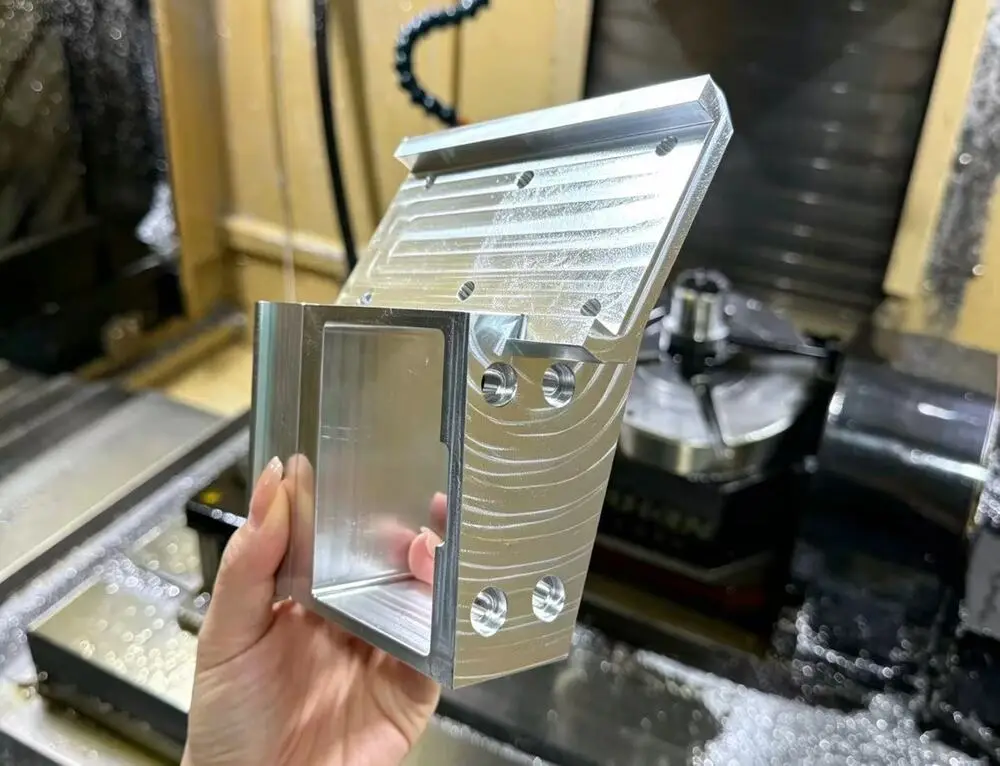
How Is CNC Machining Cost Calculated?
There is no single universal formula that can accurately price every CNC machined part.
However, buyers can understand the structure of a quotation using a simple conceptual model:
Estimated Part Cost = Material + Setup Allocation + Machining Time + Tooling + Inspection + Finishing + Project-Specific Costs
This is not an automatic pricing formula. Each category can change depending on geometry, material, quantity, quality requirements, and the production route selected by the supplier.
Material Cost
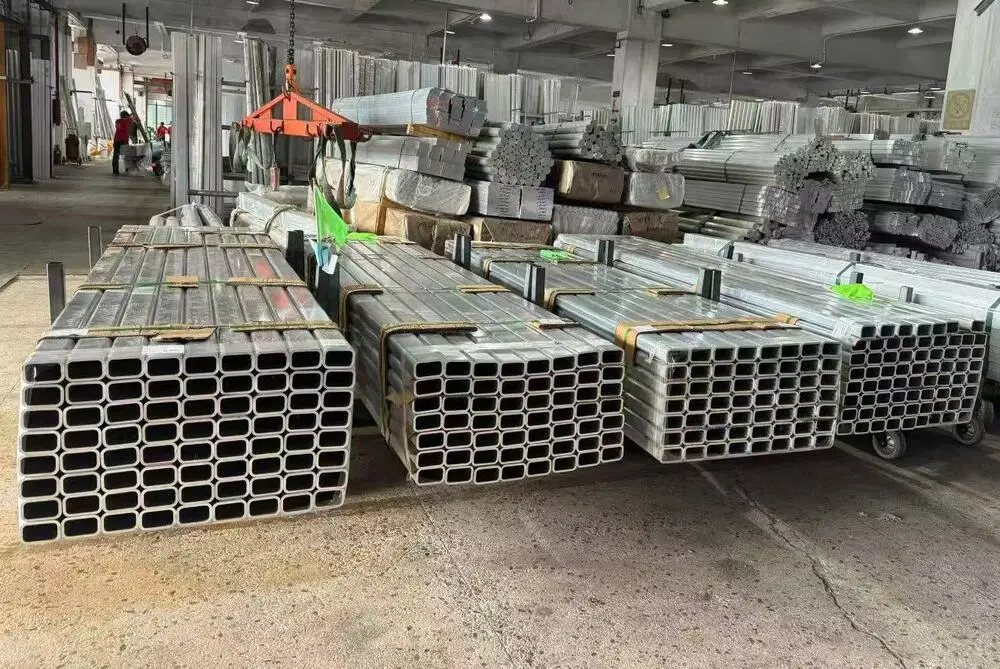
Material cost starts with the raw stock required to make the part.
Important factors include:
- Material type
- Material grade
- Stock dimensions
- Required blank size
- Material utilization
- Scrap allowance
- Certification requirements
A small finished component may still require a relatively large starting block if the geometry must be machined from solid material.
Material efficiency also matters. A part that removes most of the original stock can create more waste than a design that uses the blank more efficiently.
The material itself can change both raw-material cost and machining cost.
Aluminum, stainless steel, titanium, POM, and PEEK, for example, differ in machinability, tool wear, thermal behavior, stock value, and process requirements.
For purchasing teams, this means the material line on a drawing influences more than the price of the raw stock.
Programming and Setup
Before the machine begins cutting, the supplier normally has to prepare the job.
This may include:
- Reviewing the CAD model and engineering drawing
- Planning the machining route
- Creating CAM programs
- Selecting cutting tools
- Preparing workholding
- Establishing datums
- Setting tools and offsets
- Proving the program
- Performing initial checks
These activities take time even if only one part is ordered.
This is one reason prototypes and one-off components can have a relatively high unit cost. Preparation time cannot be spread across many pieces.
For repeat orders, some programming and process knowledge may already exist, although setup and inspection requirements can still remain.
Machining Time
Machining time is one of the most visible cost drivers.
A supplier may consider machine time together with an appropriate internal shop rate, but the rate itself does not tell the whole story.
Cycle time can increase because of:
- Large amounts of material removal
- Deep pockets
- Small cutting tools
- Long-reach tools
- Complex surfaces
- Multiple finishing passes
- Slow operations required for stability
- Difficult chip evacuation
- Frequent tool changes
Two parts made on the same machine can therefore have very different machining costs.
One may require straightforward drilling and profiling. Another may need deep cavities, several tools, multiple finishing operations, and careful dimensional control.
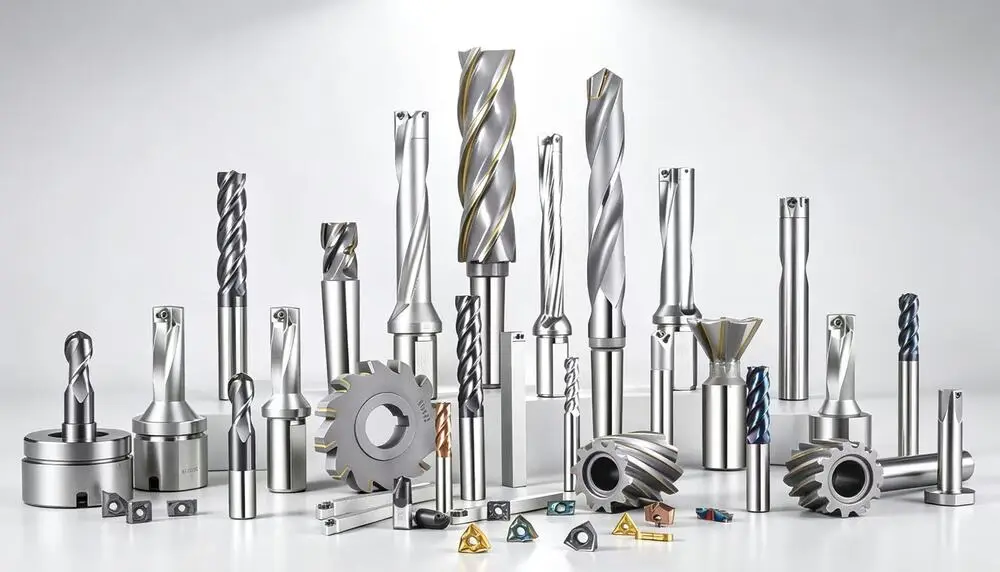
Tooling
Many CNC parts can be produced with standard cutting tools.
However, tooling cost can increase when a project requires:
- Very small-diameter tools
- Long-reach tools
- Special form tools
- Unusual thread tools
- High tool consumption
- Frequent tool replacement
Material also matters.
Harder or more difficult-to-machine materials may increase wear and shorten tool life.
Tooling should therefore be considered as part of the complete process rather than as an isolated line item.
Inspection
Inspection requirements can significantly affect the quotation.
A basic dimensional check is not the same as a detailed inspection plan involving critical GD&T features, CMM measurement, or a full dimensional report.
Inspection cost may depend on:
- Number of controlled features
- Tolerance level
- GD&T complexity
- Measurement method
- Reporting requirements
- Sampling requirements
- Customer-specific documentation
If only a few dimensions are functionally critical, the drawing should make that clear.
This helps the supplier plan appropriate machining and inspection rather than treating every dimension as equally critical.
Learn more about our quality and inspection approach.
Surface Finishing and Secondary Processes
Secondary operations can add cost after machining is complete.
Depending on project requirements, these may include:
- Anodizing
- Plating
- Passivation
- Blasting
- Polishing
- Other specified surface treatments
Secondary processes may also involve extra handling, dimensional allowance, masking, transport, or inspection.
Where finishing affects a critical dimension or interface, that requirement should be identified during quotation.
Why Machine Hourly Rate Alone Does Not Tell You the Real Cost
Machine hourly rate is easy to compare, but it can be misleading when used by itself.
Consider a simplified example:
- Supplier A: $50 per hour × 2 machining hours
- Supplier B: $80 per hour × 1 machining hour
Supplier B has the higher hourly rate, but the machining portion of the job is lower.
The point is not that a higher rate is always better.
It is that:
Rate × Time matters more than rate alone.
Even that is still incomplete.
The total quote may also include:
- Material
- Programming
- Setup
- Fixtures
- Tooling
- Inspection
- Finishing
- Packaging
- Project-specific requirements
A more capable machine may complete a complex part in fewer setups. A more experienced supplier may choose a more efficient toolpath. Another supplier may use a lower-cost machine but require significantly more operator handling.
For buyers, the useful question is therefore not:
Which supplier has the lowest hourly rate?
It is:
Which supplier has the most appropriate and efficient manufacturing route for my part?
How Does Material Affect CNC Machining Cost?
Material affects both the price of the stock and the difficulty of machining it.
Aluminum
Many aluminum alloys offer good machinability.
This can support efficient material removal, useful tool life, and relatively fast cycle times for suitable geometries.
However, cost still depends on alloy, stock size, wall thickness, burr control, dimensional requirements, and finishing.
Aluminum should not be treated as automatically “cheap” without considering the complete part.
Stainless Steel
Stainless steel can require higher cutting forces and may generate more heat than commonly machined aluminum.
Tool wear and process stability can therefore become more important.
If a stainless-steel part includes deep features, tight tolerances, or difficult tool access, machining time may increase further.
Titanium
Titanium is used where its material properties justify the added manufacturing difficulty.
During machining, heat can remain concentrated near the cutting zone, and tooling conditions require careful control.
The process may involve more conservative cutting parameters, higher tool consumption, or longer cycle times than an easier-to-machine material.
That does not mean titanium parts have a universal cost multiplier. Geometry and quality requirements still matter.
POM
POM is an engineering thermoplastic, not a metal.
It is generally machinable, but plastic machining has different considerations from metal cutting.
Heat generation, clamping pressure, wall thickness, and dimensional movement can all affect the final part.
PEEK
PEEK is a high-performance engineering thermoplastic.
Its raw material value can make stock utilization especially important.
A poor blank strategy or excessive scrap may significantly affect project economics, particularly when the part removes a large portion of the starting material.
How Does Part Geometry Affect CNC Machining Cost?
Part geometry is one of the strongest drivers of machining time and setup complexity.
Deep Pockets
Deep pockets often require longer tools.
Long tool overhang reduces rigidity and can increase vibration, deflection, and machining time.
If the depth is not functionally required, reducing it can simplify the process.
Thin Walls
Thin walls may move under cutting or clamping forces.
They can also distort as material is removed.
This may require lighter cuts, additional process planning, or more careful workholding.
Small Internal Radii
CNC milling tools are round.
Very small internal corner radii may require smaller cutters, which generally remove material more slowly and have less rigidity.
Where function allows, larger internal radii can improve machinability.
Deep Holes
Deep holes can make chip evacuation, cooling, tool stiffness, and drilling strategy more difficult.
The deeper the hole relative to its diameter, the more attention the machining process may require.
Complex 3D Surfaces
Contoured surfaces can require many tool movements and small stepovers.
Finishing a complex 3D surface may take much longer than machining a simple planar feature.
Multiple Machined Faces
A part with important features on several sides may require multiple orientations or multi-axis machining.
The supplier must determine how each surface will be accessed while preserving dimensional relationships.
Difficult Tool Access
Hidden or partially obstructed features may require special tools, longer tools, additional setups, or a different manufacturing approach.
For engineers, tool access is often one of the most effective areas to review when reducing unnecessary machining cost.
How Do Setups Affect CNC Machining Cost?
Every setup adds work beyond the actual cutting operation.
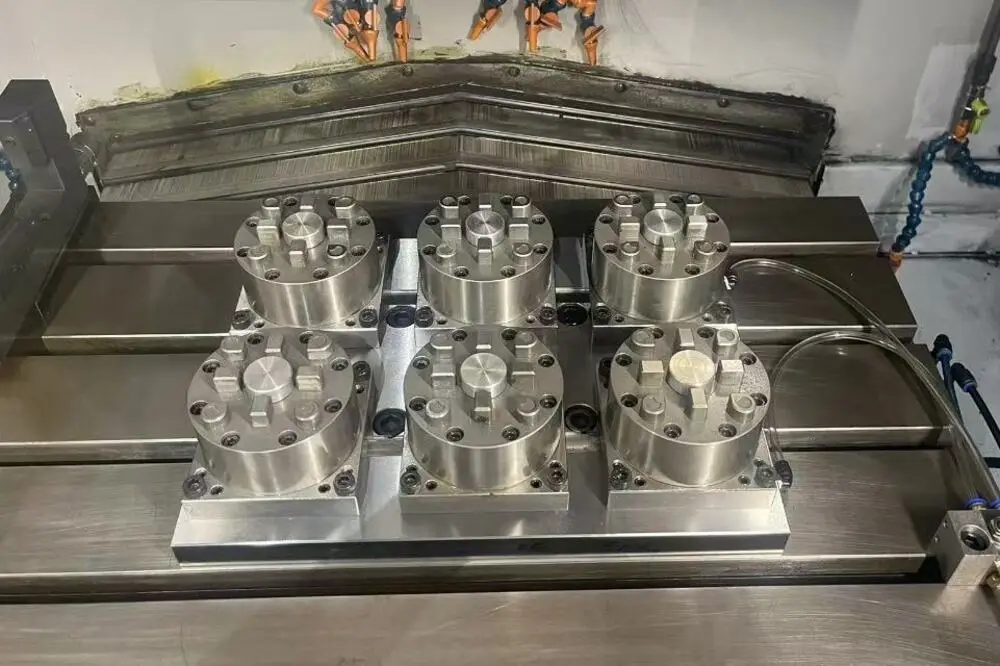
A setup may require:
- Repositioning the part
- Changing workholding
- Re-establishing datums
- Aligning the workpiece
- Checking offsets
- Verifying critical dimensions
A simple part may be completed in one primary setup.
A more complex part may follow:
Setup 1 → Reposition → Setup 2 → Reposition → Setup 3 → Inspection
Each additional setup can add operator time, alignment work, inspection, and opportunities for positional variation.
This is why setup reduction can improve both cost and process consistency.
When Can 5-Axis Machining Reduce Setup Cost?
Five-axis machining may allow a tool to reach several faces or complex features without repeatedly repositioning the part.
For suitable components, that can reduce setup count and help maintain relationships between features.
However, 5-axis machining is not automatically cheaper.
Higher machine capability can come with a different cost structure, and simple parts may be more economical on conventional equipment.
The correct question is whether 5-axis machining reduces the total manufacturing effort for the specific geometry.
Learn more about our 5-axis CNC machining capabilities.
How Do Tolerances Affect CNC Machining Cost?
Tighter tolerances can increase cost because they reduce the allowable variation in both machining and inspection.
The impact depends on the specific feature.
For suitable features and projects, YCS can support tolerances as tight as ±0.005 mm, depending on part geometry, material, machining process, and inspection requirements.
This is not a default tolerance for all features.
A tight requirement may increase the need for:
- Additional finishing passes
- More stable workholding
- Tighter thermal control during machining and inspection
- Tool wear monitoring
- More detailed measurement
- Additional process checks
Feature geometry matters as well.
Holding a tight tolerance on a short rigid diameter may be very different from controlling the same numerical tolerance on a long thin wall, deep pocket, or difficult-to-access feature.
For engineers, one of the simplest ways to avoid unnecessary cost is to apply tight tolerances only where function requires them.
Learn more about our quality and inspection approach.
How Does Inspection Affect CNC Machining Cost?
Inspection should match the risk and function of the part.
A useful way to think about inspection is in three levels:
Basic dimensional verification
For straightforward parts with general dimensional requirements.
Critical feature inspection
For important dimensions, fits, datums, positions, or geometric controls that directly affect assembly or function.
Detailed dimensional reporting or advanced measurement
For projects requiring CMM inspection, detailed documentation, complex GD&T evaluation, or customer-specific reporting.
The more detailed the inspection requirement, the more time and measurement planning may be needed.
This is why drawings should clearly distinguish critical features from non-critical dimensions.
If only five features determine whether the part functions correctly, identifying them clearly helps both the machining and quality teams focus on the right risks.
How Does Order Quantity Affect CNC Machining Cost?
Order quantity affects unit cost because some preparation activities are performed once for the batch rather than once per piece.
Conceptually:
Setup Allocation per Part = Total Setup Cost ÷ Quantity
If a setup costs the same amount whether the supplier makes one part or twenty parts, increasing quantity spreads that preparation over more units.
However, unit cost does not decrease forever in a simple straight line.
Larger quantities may also affect:
- Tool life
- Fixture strategy
- Inspection planning
- Material purchasing
- Machine capacity
- Process control
- Packaging
At higher quantities, the supplier may choose a different fixture or production method to improve repeatability and efficiency.
The relevant question is not simply “How much cheaper is 100 pieces than 10?”
It is “How does the production strategy change at this quantity?”
Prototype vs. Production CNC Machining Cost
Prototype and repeat-production projects often have different cost structures.
Prototype CNC Machining
Prototype cost is influenced heavily by preparation.
The supplier may still need to perform:
- Engineering review
- CAM programming
- Setup planning
- Workholding preparation
- Initial inspection
When only one or a few parts are produced, these activities represent a larger share of unit cost.
Repeat Production
Repeat-production work can benefit from an established process.
Depending on the project, the supplier may reuse or refine:
- Programs
- Tooling strategies
- Fixtures
- Setup methods
- Inspection plans
Preparation can be spread across more units, while process control becomes increasingly important.
For recurring production requirements, see our high-volume CNC machining capabilities.
How Does Surface Finishing Affect CNC Machining Cost?
Surface finishing adds steps after machining and can affect both price and lead time.
The effect depends on the finish and part requirements.
Possible cost drivers include:
- Secondary processing
- Masking
- Handling
- Dimensional allowance
- Cosmetic requirements
- Additional inspection
- Rework risk
Critical features may need special attention before and after finishing.
For example, if a dimension must remain controlled after anodizing or plating, that requirement should be identified in the drawing and RFQ.
This allows the machining supplier to consider the finish during process planning rather than treating it as an unrelated final step.
How Can You Reduce CNC Machining Cost?
Cost reduction should focus on removing manufacturing effort that does not improve the function of the part.
Use Tight Tolerances Only Where Function Requires Them
Do not apply the tightest tolerance to every dimension.
Identify which features affect fit, sealing, alignment, movement, or performance, and apply appropriate controls there.
Reduce Unnecessary Setups
Where possible, design features so they can be accessed from fewer orientations.
Reducing setup count can lower handling and alignment effort.
Avoid Excessively Deep Features
Deep pockets and deep holes often require longer tools and slower machining strategies.
If the depth is not necessary for function, reducing it may lower machining time.
Use Practical Internal Radii
Very small internal radii may require small tools.
Larger radii, where acceptable, can allow more rigid and efficient cutters.
Consider Tool Access
A feature that is difficult to reach can create extra setups or require specialized tooling.
Review whether the feature can be repositioned, simplified, or made more accessible without changing function.
Choose Material Around Functional Requirements
Do not select a more difficult or expensive material unless its mechanical, thermal, chemical, electrical, or environmental properties are required.
Material selection should be an engineering decision, not a default assumption.
Separate Cosmetic and Functional Surface Requirements
A cosmetic surface and a functional sealing or bearing surface may need very different controls.
Clarifying the difference can prevent unnecessary finishing or inspection.
Provide Complete RFQ Information
Incomplete information creates uncertainty.
A supplier may need to make conservative assumptions when material grade, tolerance, finish, quantity, or inspection requirements are unclear.
Providing complete data improves both technical review and quotation accuracy.
The goal is not to make the part cheaper at any cost. It is to remove manufacturing cost that does not improve part function.
Why Can Two Similar CNC Parts Have Very Different Prices?
Part size alone is a poor predictor of CNC machining cost.
Consider two parts with similar external dimensions:
| Cost Driver | Part A | Part B |
|---|---|---|
| Material | Standard aluminum | Titanium |
| Setups | 1 setup | 4 setups |
| Tolerances | General tolerances | Several tight tolerances |
| Tooling | Standard tools | Long-reach and small tools |
| Inspection | Basic inspection | Detailed CMM inspection |
| Finishing | None | Secondary finish |
Part B may require more material cost, longer cycle time, more setup work, higher tool consumption, and more detailed inspection.
The outside dimensions of the two parts may be similar, but the manufacturing routes are not.
This is why comparing CNC quotes based only on part size can be misleading.
What Should You Compare in a CNC Machining Quote?
Unit price matters, but it should not be the only comparison point.
Before comparing two quotations, confirm that both suppliers are pricing the same scope.
Check:
- Material specification
- Material grade
- Quantity
- Drawing revision
- Included tolerances
- Inspection scope
- Inspection documentation
- Surface finishing
- Secondary operations
- Packaging
- Lead-time assumptions
- Exclusions or special notes
A lower quotation may exclude inspection or finishing that another supplier has included.
Another quote may be based on a different material condition or drawing revision.
For purchasing teams, an accurate comparison requires aligning the scope before comparing price.
It is often more useful to ask:
What exactly is included in this quote?
than simply:
Why is this supplier more expensive?
What Information Should You Send for an Accurate CNC Machining Quote?
A complete RFQ helps the supplier understand the manufacturing route before pricing the job.
Where possible, provide:
- 3D CAD model
- Controlled 2D engineering drawing
- Material and grade
- Required quantity
- Critical dimensions and tolerances
- GD&T requirements
- Surface finish requirements
- Secondary finishing requirements
- Inspection requirements
- Target delivery requirement
- Relevant application information
The 3D model defines geometry.
The 2D drawing is especially important for tolerances, GD&T, datums, threads, surface requirements, finishing notes, and inspection expectations.
Complete information reduces assumptions and allows the supplier to evaluate manufacturability, inspection, and quotation scope more accurately.
Frequently Asked Questions About CNC Machining Cost
How much does CNC machining cost?
There is no universal CNC machining price.
Cost depends on material, machining time, setup, geometry, tolerances, tooling, inspection, finishing, and quantity. A reliable price requires review of the actual CAD model and engineering requirements.
How is CNC machining cost calculated?
A quotation generally considers material, preparation and setup, machining time, tooling, inspection, finishing, and project-specific requirements.
The exact calculation method varies by supplier and manufacturing route.
Why can CNC machining be expensive?
CNC machining may involve engineering review, programming, machine setup, cutting time, skilled labor, tooling, inspection, and secondary processing.
Parts with difficult geometry, tight tolerances, demanding materials, or low quantities may have a higher unit cost because more manufacturing effort is required.
Does 5-axis CNC machining cost more?
Not necessarily in total project cost.
A 5-axis machine may have a higher internal machine rate, but it can reduce setups for certain complex or multi-face parts.
Whether it is more economical depends on the complete manufacturing route.
Do tighter tolerances increase CNC machining cost?
They can.
Tight tolerances may require additional finishing passes, more stable process control, tighter thermal control during machining and inspection, and more detailed measurement.
The effect depends on the specific feature, geometry, and material.
Does ordering more parts reduce CNC machining cost per part?
Often, yes, because programming and setup costs can be spread across more units.
However, unit cost does not decrease indefinitely. Tool life, fixtures, inspection, material purchasing, and production strategy also influence pricing at higher quantities.
How can I get a more accurate CNC machining quote?
Provide a complete 3D CAD model, controlled 2D drawing, material and grade, quantity, tolerance requirements, GD&T, surface finish, secondary processing, inspection requirements, and target delivery information.
Summary
CNC machining cost reflects the complete manufacturing route, not a single machine rate. Material, geometry, setups, machining time, tolerances, inspection, finishing, and quantity all matter. Engineers can reduce unnecessary cost through better DFM, while buyers can compare quotes more accurately by aligning technical scope.
Need a Project-Specific CNC Machining Quote?
Send your CAD model, engineering drawing, material, quantity, tolerance, finishing, and inspection requirements to YCS for a manufacturing review.