
3-Axis vs 5-Axis CNC Machining: Which Process Is Right for Your Part?
Choosing between 3-axis and 5-axis CNC machining is not simply a matter of selecting the machine with more axes. The right process depends on part geometry, tool access, setup count, tolerance relationships, production quantity, and the total manufacturing effort required to meet the drawing.
3-axis CNC machining uses three linear axes—X, Y, and Z—to position the cutting tool relative to the workpiece. 5-axis machining adds two rotational axes, providing more tool or workpiece orientations. Three-axis machining is often efficient for accessible prismatic geometry, while 5-axis machining becomes valuable when multi-face features, angled geometry, difficult tool access, or setup reduction justify the additional capability.
Neither process is universally better.
The most appropriate process is the one that produces the required geometry, tolerances, and quantity through the most practical and reliable manufacturing route.
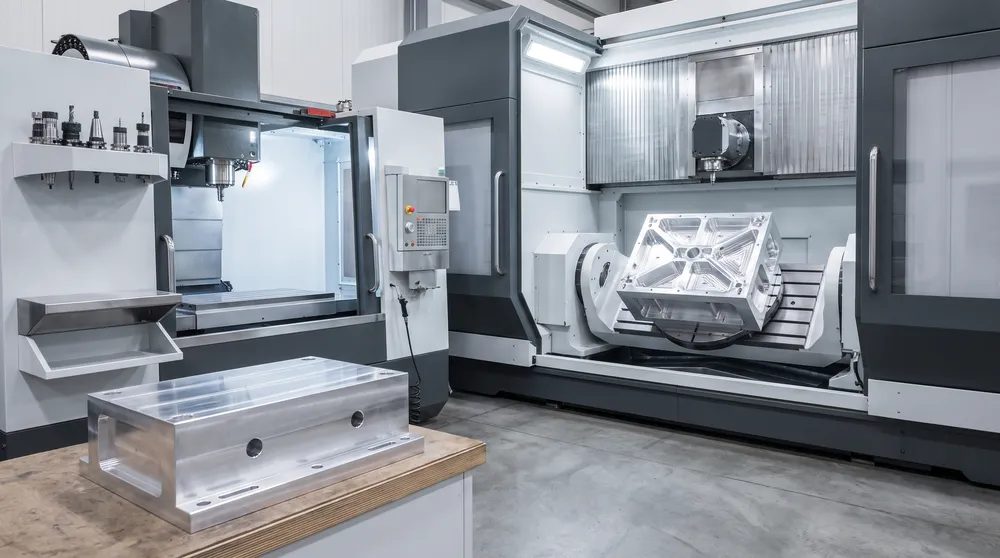
What Is 3-Axis CNC Machining?
Three-axis CNC machining controls movement along three linear directions:
- X-axis
- Y-axis
- Z-axis
In a typical milling setup, these axes allow the cutting tool and workpiece to move relative to each other in three-dimensional space while the primary tool orientation remains fixed for that setup.
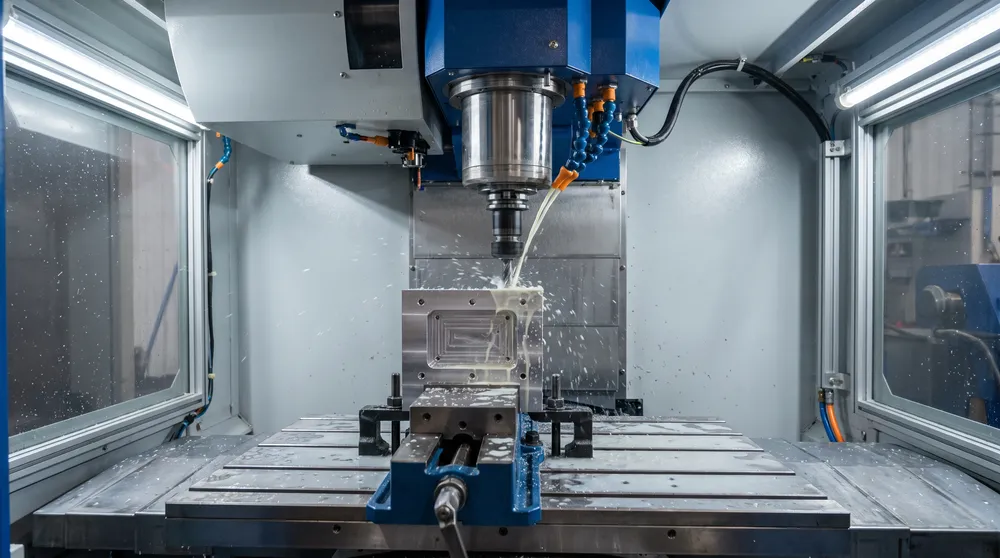
This makes 3-axis CNC machining well suited to many common parts, including:
- Plates
- Brackets
- Housings
- Pockets
- Flat surfaces
- Drilled features
- Prismatic components
- Parts with features accessible from a limited number of directions
However, 3-axis machining should not be interpreted as “one-side machining.”
A part can be repositioned into additional setups to machine several faces.
For example, a housing may be machined from the top in one setup, repositioned, and then machined from another side.
The important distinction is that the workpiece generally needs to be reoriented when the cutting direction changes significantly.
For many straightforward parts, this is completely practical and may be the most efficient manufacturing route.
What Is 5-Axis CNC Machining?
Five-axis CNC machining combines the X, Y, and Z linear axes with two additional rotational axes.
The exact machine architecture varies.
Depending on the equipment, rotation may occur through:
- The machine table
- The spindle head
- A combination of table and head movement
The main engineering advantage is not simply “two more axes.”
It is greater freedom to orient the cutting tool relative to the workpiece.
This can allow the machining process to reach:
- Angled surfaces
- Features on several faces
- Compound-angle geometry
- Difficult-to-access areas
- Complex contoured surfaces
For suitable parts, the additional orientation capability may reduce the need to remove, reposition, and re-clamp the component repeatedly.
That can be particularly useful when important features must maintain relationships across several faces.
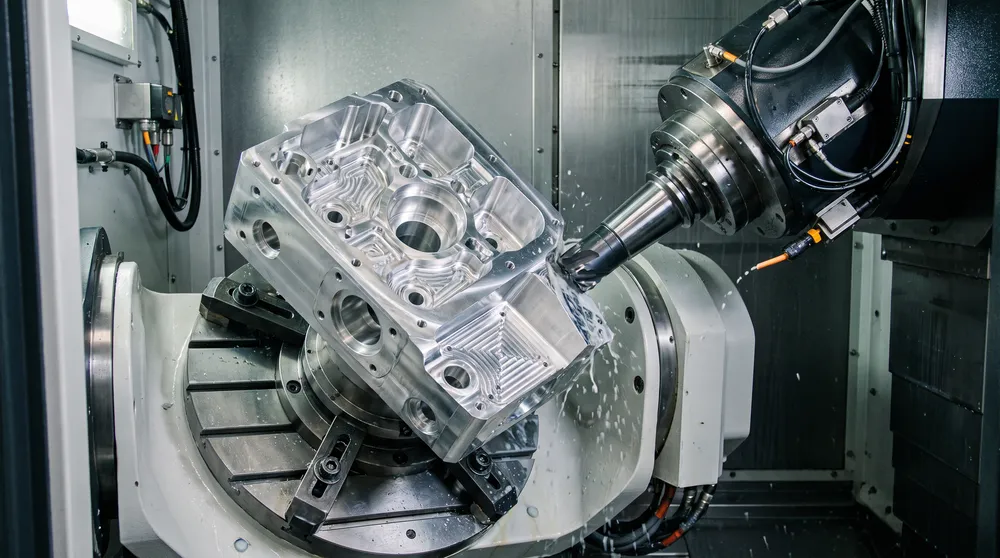
However, 5-axis machining does not mean all five axes must always move simultaneously.
That distinction is important.
What Is the Difference Between 3+2 and Simultaneous 5-Axis Machining?
The term “5-axis machining” can describe more than one machining strategy.
Two common concepts are 3+2 indexed machining and simultaneous 5-axis machining.
3+2 Indexed Machining
In 3+2 machining, the two rotary axes are used to orient the workpiece or cutting direction into a selected position.
Once positioned, machining is typically performed primarily using the three linear axes.
The rotary position may then change again for another feature or face.
This approach can be useful for:
- Multi-face parts
- Angled holes
- Angled surfaces
- Features requiring several orientations
- Reducing manual repositioning
The key benefit is that the machine can index the component into useful orientations without the operator manually resetting the part for every face.
Simultaneous 5-Axis Machining
In simultaneous 5-axis machining, multiple linear and rotary axes can move in coordinated motion while cutting.
This is useful for geometry where the required tool orientation changes continuously.
Examples may include:
- Complex contours
- Freeform surfaces
- Continuously changing surface angles
- Geometry requiring dynamic tool orientation
The two approaches should not be treated as identical.
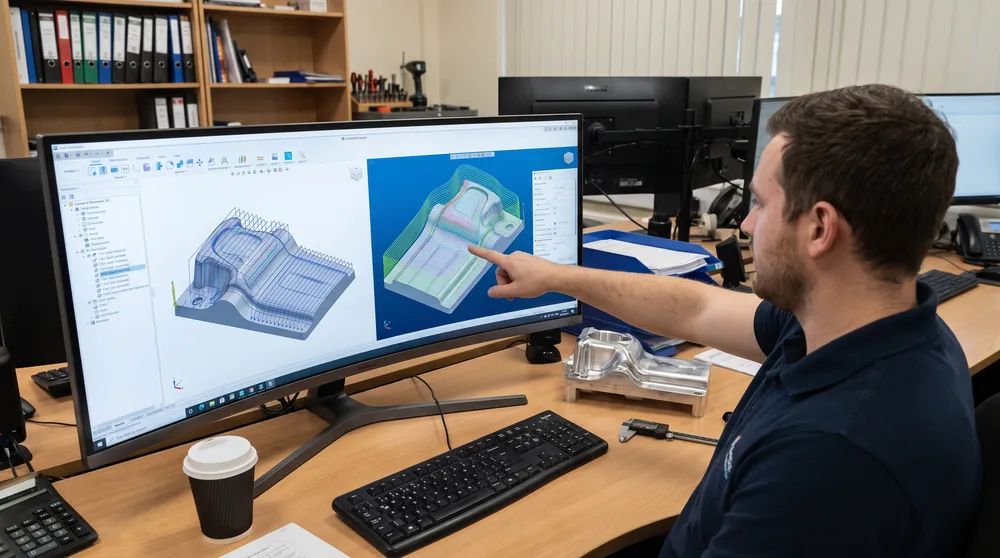
| Factor | 3+2 Indexed Machining | Simultaneous 5-Axis |
|---|---|---|
| Rotary-axis use | Positions the part or tool between cutting orientations | Can move during cutting |
| Cutting strategy | Primarily linear-axis cutting after indexing | Coordinated multi-axis movement |
| Common benefit | Multi-face access and setup reduction | Complex contour and orientation control |
| Programming complexity | Generally lower | Generally higher |
| Best fit | Angled and multi-face features | Complex continuously changing geometry |
A project should therefore be evaluated based on geometry rather than assuming that “5-axis” always means simultaneous five-axis motion.
3-Axis vs 5-Axis CNC Machining: Key Differences
The most useful comparison is not simply the number of axes.
It is how those axes change the manufacturing route.
| Factor | 3-Axis CNC | 5-Axis CNC |
|---|---|---|
| Linear motion | X, Y, Z | X, Y, Z |
| Rotary motion | No additional rotary cutting axes in a standard setup | Two additional rotational axes |
| Tool access | Limited by setup orientation | More approach angles available |
| Multi-face machining | Often requires repositioning | May reduce repositioning |
| Programming | Generally simpler | Generally more complex |
| Workholding | Often straightforward | May require more advanced planning |
| Complex angles | May need additional setups | Often easier to access |
| Tool orientation | Fixed for the setup | Greater orientation flexibility |
| Best fit | Accessible prismatic geometry | Multi-face or complex geometry |
| Cost | Often efficient for simple parts | Can reduce total effort on suitable complex parts |
For buyers, one of the most important differences is often:
How many setups does the geometry require?
A more capable machine can be valuable if it reduces the total number of operations needed to produce the part.
When Is 3-Axis CNC Machining the Better Choice?
Three-axis machining is often the more practical option when the geometry does not require additional orientation capability.
Typical situations include:
- Features accessible from one primary direction
- Simple prismatic parts
- Plates and brackets
- Straightforward housings
- Conventional pockets
- Standard drilling
- Flat surfaces
- Parts requiring only a small number of simple setups
For these components, 3-axis machining can offer several advantages.
Programming is often more straightforward.
Workholding may be simpler.
Setup planning can be easier.
Machine availability may also make the process practical for repeat production.
The presence of multiple machined faces does not automatically require 5-axis machining.
If repositioning can be performed reliably using clear datums and practical fixtures, 3-axis machining may remain the better choice.
The correct question is not:
Can a 5-axis machine make this part?
It is:
Does the part actually benefit from 5-axis capability?
If not, using a simpler process may be more efficient.
When Is 5-Axis CNC Machining the Better Choice?
Five-axis machining becomes worth evaluating when additional tool orientation can meaningfully simplify the manufacturing route.
Multi-Face Features
A component with important geometry on several faces may otherwise require multiple manual setups.
Five-axis capability can sometimes make several of those faces accessible in one primary setup.
Angled Holes and Surfaces
Features that are not aligned with the primary X, Y, or Z directions can require special fixturing in a conventional setup.
Rotary-axis positioning can provide a more direct machining orientation.
Complex Contours
Some components contain surfaces whose geometry changes continuously.
These features may benefit from more flexible tool orientation.
Difficult Tool Access
Additional orientation may allow the cutter to approach a feature more directly.
For suitable geometry, this can reduce dependence on excessively long tooling.
Critical Relationships Across Faces
If two or more critical features are located on different faces, repeated re-clamping can introduce additional datum-transfer steps.
Reducing those steps may simplify control of the relationship between features.
Setup Reduction
This is often one of the strongest reasons to evaluate 5-axis machining.
However, none of these conditions automatically means the part must be machined on a 5-axis machine.
They indicate that 5-axis should be considered as part of the process plan.
How Do Setups Affect the Choice Between 3-Axis and 5-Axis?
A setup includes more than placing a part on a machine.
It may involve:
- Workholding
- Clamping
- Datum establishment
- Alignment
- Tool and work offsets
- Verification
- Initial measurement
Imagine a conceptual 3-axis process:
Setup 1 → Machine Top Features → Reposition → Setup 2 → Machine Side Features → Reposition → Setup 3 → Machine Angled Features
A suitable 5-axis process might instead allow:
Setup 1 → Machine Multiple Accessible Faces and Orientations
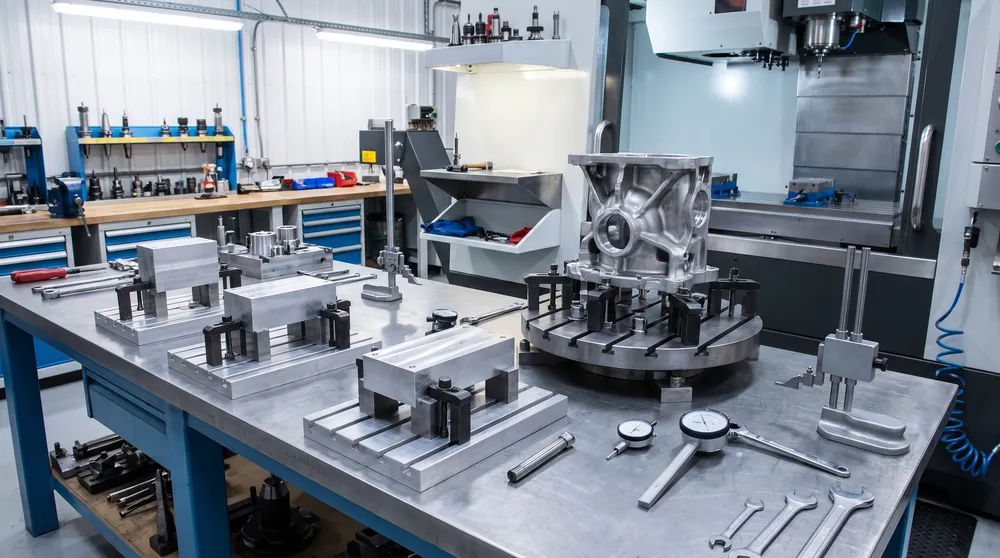
This example is only conceptual.
Many 5-axis parts still require more than one setup.
The important point is that every repositioning step creates additional manufacturing work.
It may also require the part to be re-established relative to a new reference.
For suitable geometry, reducing setup count can reduce:
- Operator handling
- Alignment work
- Fixture changes
- Datum transfer
- Setup inspection
- Non-cutting time
This is why higher machine capability can sometimes produce a simpler overall manufacturing route.
Is 5-Axis Machining More Accurate Than 3-Axis?
Not automatically.
Axis count alone does not determine finished-part accuracy.
A 3-axis machining process can produce highly accurate parts when the geometry, workholding, tooling, machine capability, process control, and inspection strategy are appropriate.
Likewise, simply using a 5-axis machine does not guarantee tighter tolerances.
Where 5-axis can help is in reducing repositioning for certain geometries.
If critical features on multiple faces can be produced without repeatedly removing and re-establishing the part, there may be fewer datum-transfer steps.
That can help preserve relationships between features.
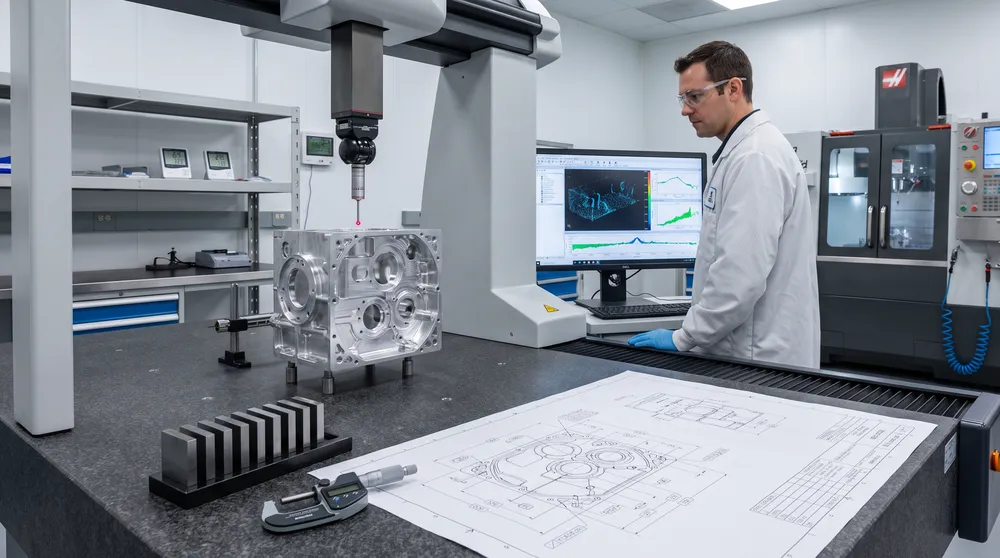
However, finished-part tolerance still depends on factors including:
- Part geometry
- Material
- Tooling
- Tool wear
- Workholding
- Machine capability and condition
- Thermal stability
- Programming
- Inspection method
For suitable features and projects, YCS can support tolerances as tight as ±0.005 mm, depending on these project-specific conditions.
That capability should not be interpreted as a default tolerance or as a benefit automatically created by 5-axis machining.
For more detail, see our CNC Machining Tolerances Guide.
Is 5-Axis CNC Machining Faster?
Sometimes.
But “faster” must be defined carefully.
A 5-axis machine is not automatically faster because it has more axes.
For a simple plate with accessible pockets and holes, a 3-axis process may be faster and easier.
The advantage appears when 5-axis capability reduces non-cutting operations such as:
- Repositioning
- Re-clamping
- Fixture changes
- Alignment
- Re-establishing datums
- Intermediate verification
For a complex part, total production time can be influenced as much by setup and handling as by actual cutting time.
Therefore:
Faster axis motion does not necessarily mean shorter total manufacturing time.
The better comparison is total process time.
A more complex machine may spend less time on repeated setups, while a simpler process may be more efficient for straightforward geometry.
Is 5-Axis CNC Machining More Expensive?
It depends on the complete manufacturing route.
Five-axis equipment and programming can involve a different cost structure from conventional 3-axis machining.
For a simple component, those additional capabilities may provide little benefit.
In that case, 3-axis machining may be more economical.
However, consider a complex part that would otherwise require:
- Several setups
- Multiple fixtures
- Repeated alignment
- Additional operator handling
- Long-reach tooling
- More intermediate inspection
If 5-axis machining reduces several of those steps, the overall part cost may become more competitive even if the internal machine rate is higher.
This leads to an important purchasing principle:
A higher machine rate does not necessarily mean a higher finished-part cost.
Buyers should compare the complete manufacturing route rather than one hourly figure.
For a deeper explanation, see our CNC Machining Cost Guide.
How Does Tool Access Affect 3-Axis vs 5-Axis Machining?
Tool access is one of the strongest reasons to consider multi-axis machining.
In 3-axis machining, the cutting direction is constrained by the current setup orientation.
If a feature faces another direction, the part may need to be repositioned.
Difficult access may also require:
- Long-reach tools
- Smaller cutters
- Special fixtures
- Additional setups
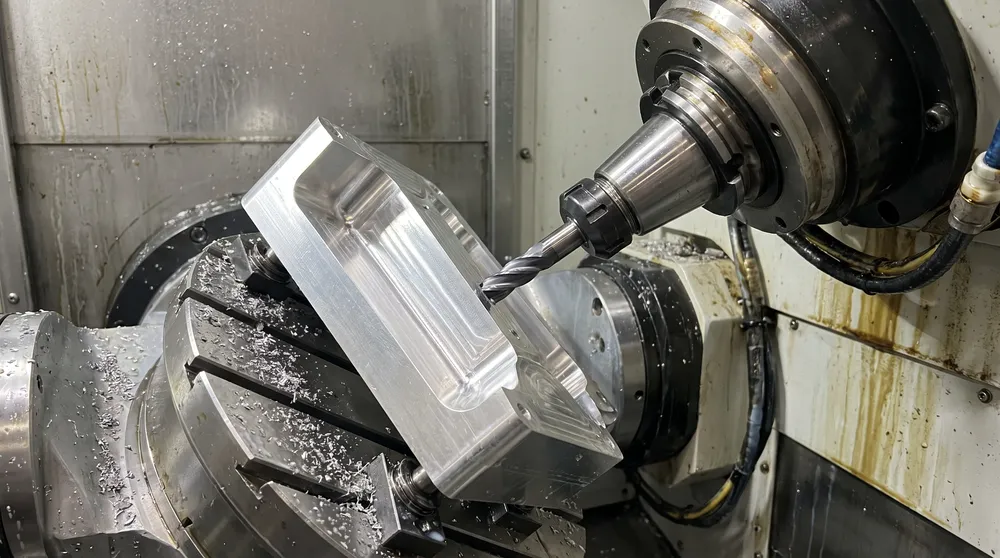
Five-axis capability provides more options for orienting the tool relative to the feature.
For suitable geometry, this may allow:
- More direct access
- More favorable cutting orientation
- Reduced tool overhang
- Better holder clearance
- Access to angled geometry
However, this depends on the actual part.
Five-axis machining does not eliminate all access limitations.
The cutter, holder, workholding, spindle, and surrounding part geometry must still be considered together.
For more design guidance, see our Design for CNC Machining Guide.
Where Does 4-Axis CNC Machining Fit?
Four-axis CNC machining typically adds one rotational axis to the X, Y, and Z linear axes.
This can be useful when a part needs to rotate around one axis for machining operations.
Typical applications may include:
- Features around cylindrical parts
- Indexed side machining
- Repeated features around a circumference
- Multi-face work accessible through one rotational direction
Four-axis machining therefore sits between conventional 3-axis machining and full 5-axis capability for many applications.
It can reduce repositioning when one controlled rotational direction is sufficient.
However, if geometry requires orientation around two rotational directions, 5-axis capability may be more appropriate.
What Parts Are Suitable for 3-Axis vs 5-Axis Machining?
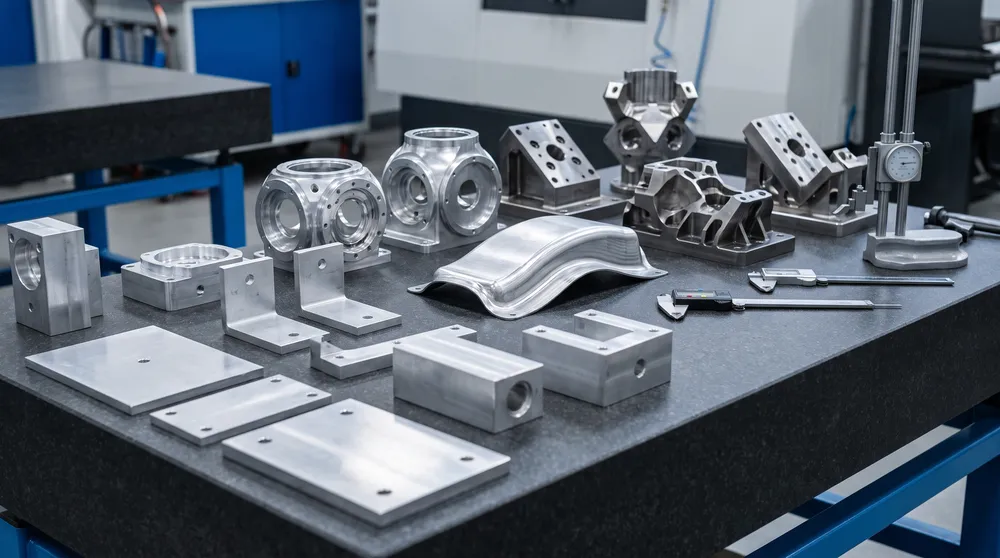
There is no strict list that applies to every part, but certain geometries commonly favor one approach.
Parts Often Suitable for 3-Axis Machining
Examples include:
- Plates
- Flat brackets
- Accessible housings
- Pockets
- Simple fixtures
- Straight drilling patterns
- Prismatic components
- Parts dominated by top-down machining
These components may still require multiple operations, but their geometry often does not justify more advanced orientation control.
Parts That May Benefit From 5-Axis Machining
Examples include:
- Multi-sided housings
- Complex brackets
- Angled holes
- Compound-angle features
- Contoured components
- Geometry requiring several orientations
- Parts with important relationships across several faces
- Components with difficult tool-access conditions
The phrase may benefit is important.
Geometry should be reviewed before assigning a machining process.
How Does Production Quantity Affect the Choice?
Quantity can influence the most efficient process, but it does not determine the axis count by itself.
For prototypes, the process plan may prioritize:
- Flexible setups
- Fast engineering feedback
- Lower dedicated tooling
- Practical one-off workholding
For repeat production, priorities may shift toward:
- Fixture repeatability
- Setup consistency
- Cycle time
- Operator handling
- Tool life
- Inspection planning
A 3-axis process requiring several setups may still be efficient if dedicated fixtures make those setups fast and repeatable.
Conversely, a complex component may benefit from 5-axis setup reduction at relatively low or high quantities.
The decision should therefore consider geometry and the complete production route together.
For recurring production requirements, see our high-volume CNC machining capabilities.
How Should Engineers Choose Between 3-Axis and 5-Axis CNC Machining?
The best process is usually the simplest manufacturing strategy that can reliably satisfy the drawing.
A practical starting point is:
| Part Requirement | Process to Evaluate First |
|---|---|
| Mostly accessible from one direction | 3-axis |
| Straightforward prismatic geometry | 3-axis |
| Only a few simple setups required | 3-axis |
| Multiple angled surfaces | 5-axis |
| Important features across several faces | 5-axis |
| Difficult tool access | 5-axis |
| Setup reduction may improve feature relationships | 5-axis |
| Simple geometry with no multi-axis need | 3-axis |
This table is a starting point, not a manufacturing rule.
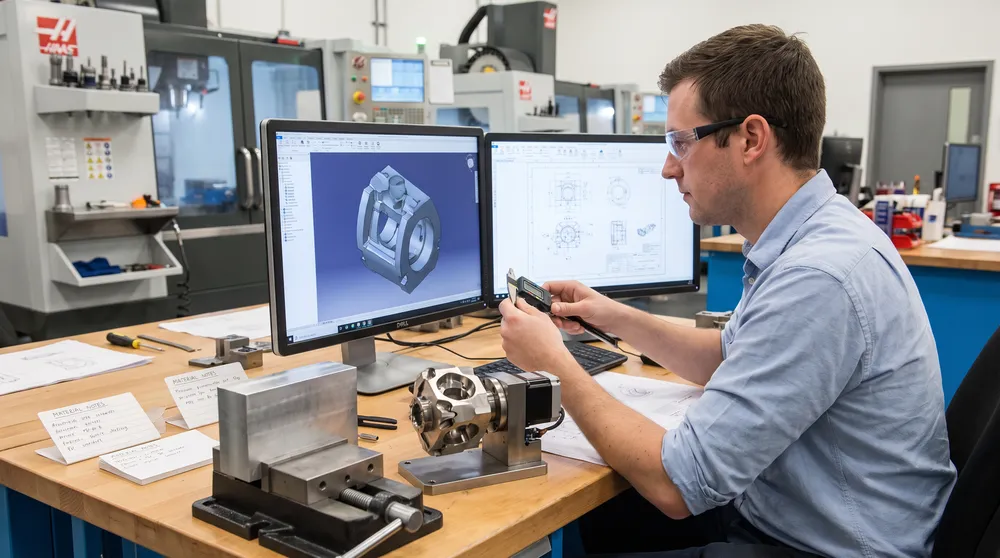
Before choosing the process, ask:
- How many faces require machining?
- Are important features angled relative to the primary setup?
- Can the tools reach the features with suitable rigidity?
- How many setups would a 3-axis process require?
- Are critical relationships transferred between setups?
- Could long tool reach be reduced through part orientation?
- Which tolerances are functionally important?
- How will the part be held?
- How will critical features be inspected?
- What quantity is required?
- Does additional axis capability reduce total manufacturing effort?
These questions provide much more useful information than simply asking which machine has more axes.
How Should Inspection Be Considered for Multi-Axis Parts?
Complex multi-face components often include feature relationships that must be verified after machining.
Inspection may need to evaluate:
- Feature location across several faces
- Angular relationships
- Bore position
- Datum relationships
- Parallelism
- Perpendicularity
- Position
- Other GD&T requirements
This is why machining strategy and inspection strategy should be considered together.
Reducing setups may simplify some relationships, but the finished part must still be measurable against the drawing requirements.
The appropriate measurement method depends on feature geometry, tolerance, datum structure, accessibility, and reporting requirements.
Learn more about our quality and inspection approach.
What Should You Send for a Machining Review?
If you are unsure whether a part should be produced using 3-axis, indexed multi-axis, or 5-axis machining, provide enough information for the supplier to evaluate the complete manufacturing route.
Where possible, send:
- 3D CAD model
- Controlled 2D engineering drawing
- Material and grade
- Required quantity
- Critical tolerances
- GD&T
- Datum requirements
- Important feature relationships
- Surface finish requirements
- Secondary processing requirements
- Inspection requirements
- Relevant application information
The CAD model helps evaluate geometry and tool access.
The drawing communicates functional requirements and controlled dimensions.
Both are important when the choice between machining strategies depends on setup count, tolerance relationships, or inspection.
Frequently Asked Questions About 3-Axis vs 5-Axis CNC Machining
What is the difference between 3-axis and 5-axis CNC machining?
Three-axis CNC machining uses X, Y, and Z linear motion.
Five-axis machining adds two rotational axes, providing additional tool or workpiece orientation.
This can improve access to angled, multi-face, or complex geometry and may reduce repositioning for suitable parts.
Is 5-axis CNC machining faster?
Sometimes.
Five-axis machining can reduce setup and handling time for complex components, but a straightforward part may be faster to produce using 3-axis machining.
Total manufacturing time is more important than axis count alone.
Is 5-axis machining more accurate than 3-axis?
Not automatically.
Five-axis machining may reduce datum transfer and repositioning for some parts, but finished-part accuracy still depends on geometry, material, tooling, workholding, machine capability, thermal stability, and inspection.
Is 5-axis machining more expensive?
Not necessarily in total part cost.
Machine and programming costs may differ, but fewer setups, fixtures, and handling operations can offset those differences for suitable complex components.
What is 3+2 machining?
In 3+2 machining, rotary axes position the workpiece or tool at a selected angle, after which cutting is typically performed primarily using the three linear axes.
It is commonly used for multi-face and angled features.
Is 3+2 machining the same as simultaneous 5-axis machining?
No.
In 3+2 machining, the rotary axes primarily establish the cutting orientation.
In simultaneous 5-axis machining, multiple linear and rotary axes can move together during cutting.
Is there a 4-axis CNC machine?
Yes.
Four-axis machining generally adds one rotational axis to X, Y, and Z movement.
It can be useful for cylindrical geometry, indexed side features, and parts requiring rotation around one primary axis.
When should I choose 5-axis machining?
Five-axis machining is worth evaluating when a part includes multi-face geometry, angled features, complex contours, difficult tool access, or when reducing repeated setups may improve the overall manufacturing route.
It should not be selected simply because it offers more axes.
Summary
3-axis and 5-axis CNC machining are both effective when matched to the right geometry. Three-axis machining is often efficient for accessible prismatic parts, while 5-axis capability becomes valuable when multi-face features, angled geometry, tool access, or setup reduction justify it.
The best process is the one that reliably meets the drawing with appropriate total manufacturing effort.
Not Sure Whether Your Part Needs 3-Axis or 5-Axis Machining?
Send your CAD model, engineering drawing, material, quantity, tolerance, and inspection requirements to YCS for a project-specific manufacturing review.