
How to Choose a CNC Machining Supplier: A Practical Guide for Engineers and Buyers
Choosing a CNC machining supplier requires more than comparing unit prices. The right supplier must match your part geometry, material, tolerance, quantity, inspection requirements, and production expectations. A structured evaluation helps engineers and buyers compare manufacturing evidence instead of relying on marketing claims or the lowest quotation.
To choose a CNC machining supplier, first confirm that its machining capabilities match your part, material, tolerances, quantity, and inspection requirements. Then evaluate drawing review, DFM support, quality control, communication, capacity, lead time, quotation scope, and production readiness. The right supplier for a project is the one whose manufacturing route fits the actual technical and production requirements.
The important question is therefore not simply:
Who is the best CNC machining supplier?
It is:
Which supplier is the best fit for this part, drawing, quantity, and production requirement?

Why Should CNC Supplier Selection Start With the Part?
A CNC machining supplier can be capable in general and still be the wrong fit for a specific project.
Before comparing suppliers, define what the part actually requires.
Important project inputs include:
- Part geometry
- Material and grade
- Quantity
- Critical tolerances
- GD&T
- Surface finish
- Secondary finishing
- Inspection requirements
- Required documentation
- Delivery expectations
- Repeat-order potential
A simple aluminum plate with general tolerances creates a very different supplier requirement from a titanium component with multi-face features, tight positional controls, difficult inspection access, and recurring production demand.
The same is true for engineering plastics.
A supplier familiar with aluminum does not automatically have the same experience with POM or PEEK, where thermal behavior, clamping, and dimensional movement may require different process decisions.
This is why supplier qualification should begin with the actual manufacturing problem.
A supplier can be capable in general and still be the wrong fit for a specific part.
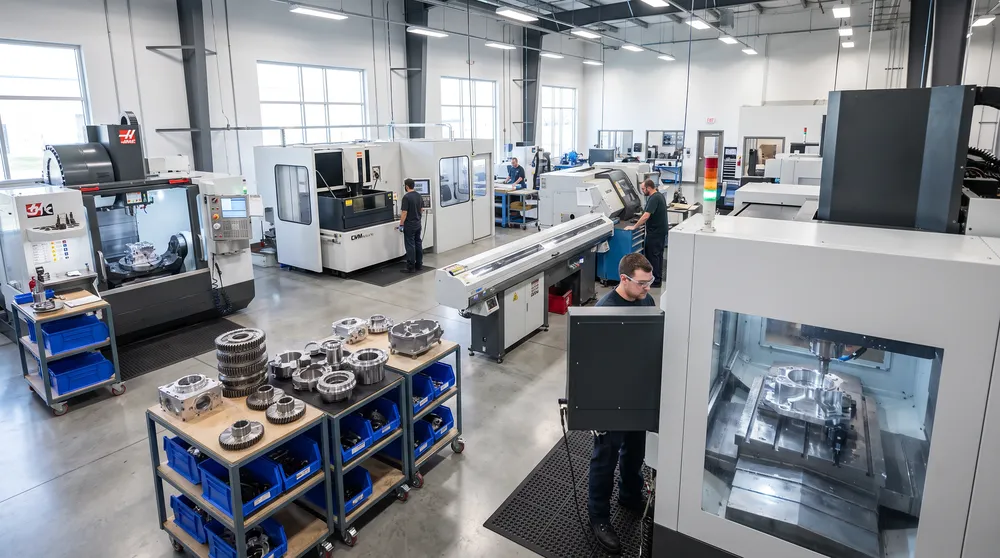
1. Does the Supplier’s Machining Capability Match Your Part?
The first evaluation should focus on process fit.
Do not begin by counting machines or comparing equipment brands.
Instead, ask whether the supplier’s available processes can produce the required geometry efficiently and reliably.
Relevant capabilities may include:
- CNC milling
- CNC turning
- Multi-axis machining
- 5-axis machining where appropriate
- Supporting processes such as EDM where required
- Suitable workholding and fixture strategies
- Prototype machining
- Repeat-production machining
A part with straightforward top-down pockets may be well suited to conventional CNC milling.
A component with important features across several faces may benefit from indexed or 5-axis machining if that reduces repositioning.
A rotational component may be better suited to CNC turning or a combined turning and milling process.
The goal is not to select the supplier with the most advanced equipment.
It is to select one whose equipment and process planning match the part.
Material experience also belongs in this evaluation.
A supplier should understand how the selected material affects cutting strategy, tooling, heat, workholding, dimensional stability, and inspection.
Review our CNC machining services and broader manufacturing capabilities for more information.
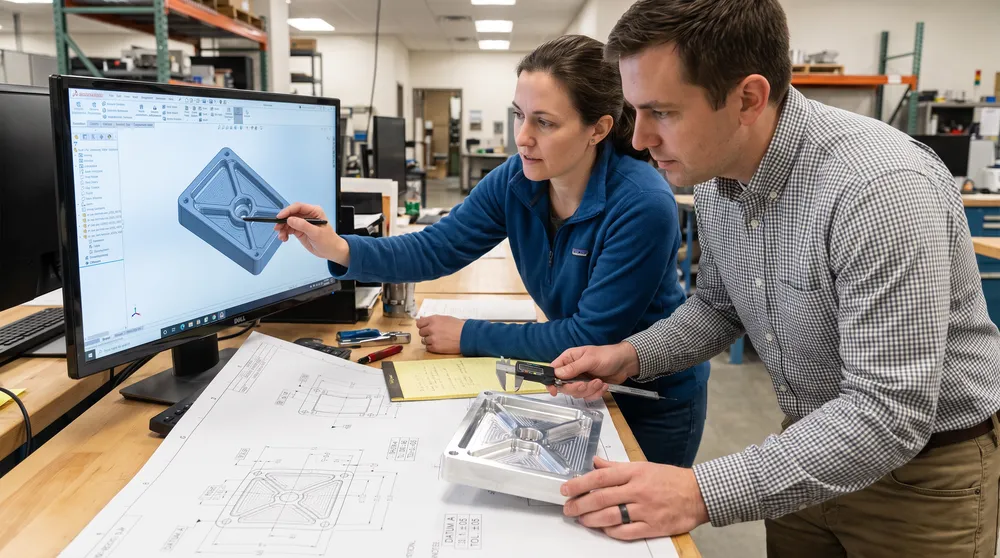
2. Can the Supplier Review Your Drawing Properly?
A fast quotation is useful only if the supplier has understood what is being quoted.
For complex parts, one of the strongest signs of engineering competence is the quality of the questions asked during drawing review.
A supplier should be able to identify issues such as:
- CAD and drawing inconsistencies
- Missing or unclear tolerances
- Ambiguous datum structures
- Difficult tool access
- Conflicting surface requirements
- Tight tolerances on flexible features
- Finishing requirements that may affect dimensions
- Inspection requirements that are difficult to verify
- Features that may require additional setups
This does not mean every project should generate a long list of DFM comments.
Simple parts may require very little discussion.
But if a complex drawing contains several difficult features and the supplier has no technical questions at all, buyers should understand what assumptions are being made.
A useful supplier should also distinguish between a genuine manufacturing risk and a simple preference.
For example:
This pocket is relatively deep and may require long-reach tooling, which can increase deflection risk.
is more useful than:
Please simplify the design.
The first statement explains the manufacturing reason and gives the engineer something concrete to evaluate.
For more detail, see our Design for CNC Machining Guide.
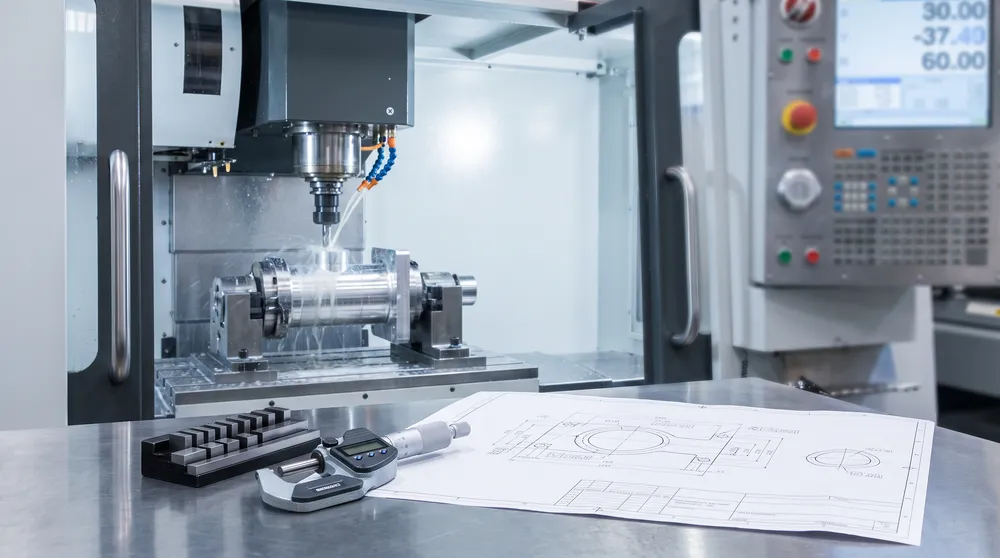
3. Can the Supplier Meet the Required Tolerances?
One of the least useful supplier-selection questions is:
What is your tightest tolerance?
Tolerance capability is feature-specific.
A more meaningful question is:
Can this supplier control these specific critical features in this material, geometry, and setup?
Tolerance capability depends on factors such as:
- Feature size
- Feature geometry
- Material
- Wall rigidity
- Tool access
- Workholding
- Number of setups
- Datum strategy
- Thermal stability
- Machine capability and condition
- Measurement method
For example, a tight tolerance on a short, accessible diameter may be easier to control than the same numerical tolerance on a long thin wall or deep bore.
For suitable features and projects, YCS can support tolerances as tight as ±0.005 mm, depending on part geometry, material, machining process, machine capability and condition, thermal stability, and inspection requirements.
This is a project-specific capability, not a default tolerance for every dimension.
When evaluating any supplier, ask how the required tolerance will be produced and verified rather than relying only on a number published on a website.
For more detail, see our CNC Machining Tolerances Guide.
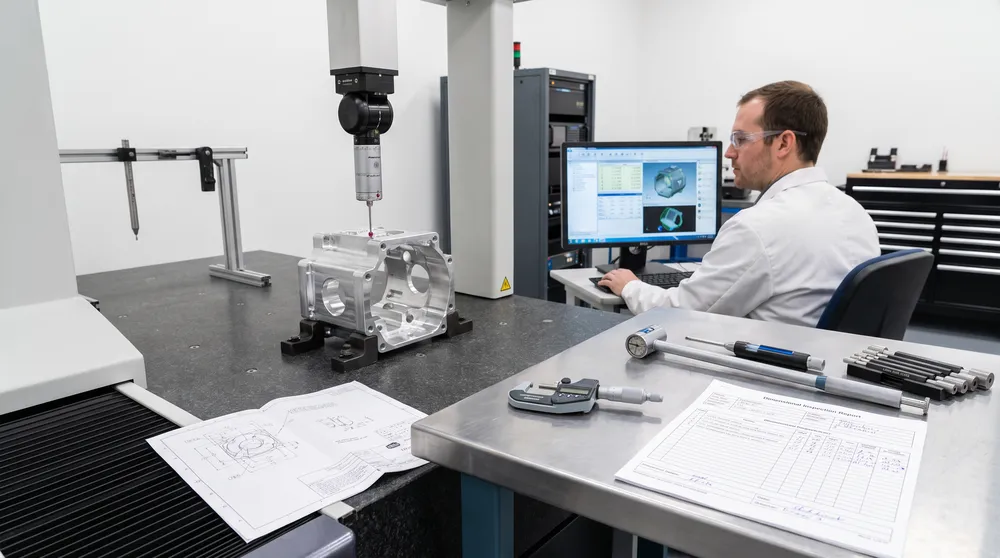
4. How Does the Supplier Inspect Critical Features?
Machining capability and inspection capability should be evaluated together.
A supplier may have capable CNC equipment, but buyers should still understand how critical requirements will be measured.
Important questions include:
- Which features are considered critical?
- What measurement method will be used?
- How will datums be established?
- Does the drawing contain GD&T?
- Is a CMM or another advanced method appropriate?
- Is a dimensional report required?
- Is sampling acceptable, or is more detailed inspection needed?
- What documentation is included in the quotation?
A supplier with a CMM is not automatically the better supplier.
The important issue is whether the inspection strategy fits the part.
Depending on the feature, appropriate equipment may include:
- Calipers
- Micrometers
- Bore gauges
- Thread gauges
- Height measurement
- Optical systems
- Coordinate measuring machines
The measurement approach should be selected around feature geometry and tolerance.
A buyer should also make sure that quotation scope matches inspection expectations.
A basic dimensional check and a full dimensional report are not the same commercial requirement.
Learn more about our quality and inspection approach.
5. Does the Supplier Understand Your Material?
Material experience matters because CNC machining is not only about producing geometry.
Different materials change the manufacturing process.
Aluminum
Many aluminum alloys machine efficiently, but thin walls, large material removal, burr formation, and dimensional stability can still affect process planning.
Stainless Steel
Stainless steel can generate higher cutting forces, more heat, and increased tool wear compared with many aluminum alloys.
This can become especially important for small tools, deep features, and tight tolerances.
Titanium
Titanium can concentrate heat near the cutting zone and often requires careful process control.
Tool wear, cutting strategy, and rigid workholding become important considerations.
POM
POM is an engineering thermoplastic, not a metal.
Heat, clamping force, material movement, and thermal expansion need to be considered differently from metal machining.
PEEK
PEEK is a high-performance engineering thermoplastic.
Its material value and dimensional behavior make stock utilization and stable process planning important.
When evaluating a supplier, do not ask only:
Can you machine this material?
Also ask whether the supplier understands how that material affects the specific geometry and tolerance requirements of your project.
6. Can the Supplier Support Your Quantity and Production Strategy?
A supplier that performs well on a prototype is not automatically the best choice for repeat production.
Likewise, a production-focused supplier may not always be the best fit for a rapidly changing development part.
Quantity can change the optimal manufacturing strategy.
Prototype Production
For a prototype, the supplier may prioritize:
- Flexible workholding
- Fast programming
- Low dedicated tooling
- Engineering feedback
- Practical one-off setup
Repeat Production
For recurring production, the priorities may shift toward:
- Repeatable fixtures
- Stable setup methods
- Tool-life planning
- Cycle-time consistency
- Revision control
- Repeatable inspection
- Production capacity
Buyers should therefore ask how the supplier’s process changes when quantity increases.
For example:
- Will dedicated workholding become appropriate?
- How will recurring setups be controlled?
- How are program revisions managed?
- How are drawing revisions communicated?
- How will inspection scale?
- How will the supplier manage recurring quality requirements?
The best supplier for a production program is one whose process can remain stable as order volume and repetition increase.
For recurring programs, see our high-volume CNC machining capabilities.
7. How Should You Evaluate DFM Support?
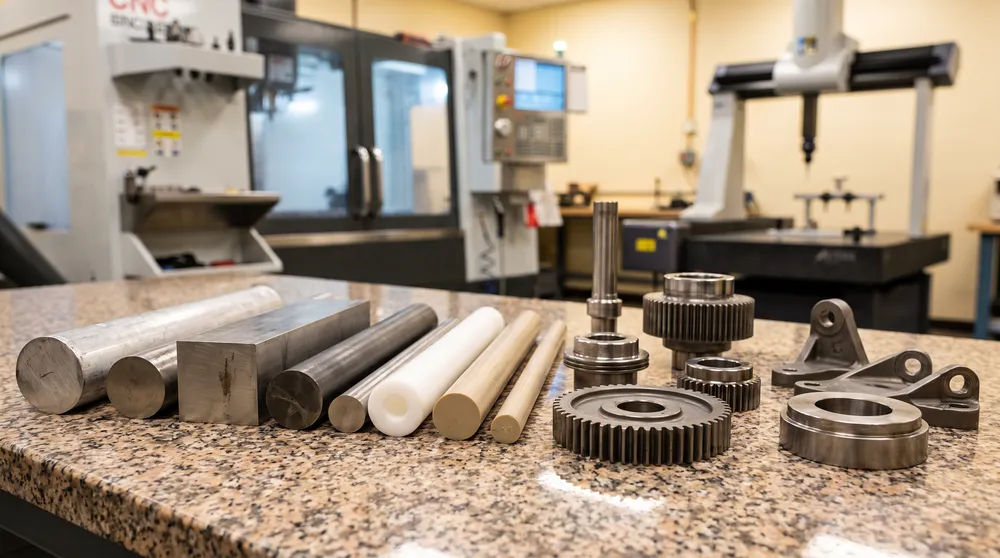
Many suppliers say they provide DFM support.
The useful question is what that support actually looks like.
Good CNC DFM feedback should be:
- Specific
- Connected to the actual geometry
- Technically explained
- Focused on manufacturing risk
- Respectful of engineering function
- Practical to evaluate
For example:
This deep pocket requires long tooling and may increase deflection and machining time.
is useful because it explains the reason.
By contrast:
Change this feature.
provides little engineering value unless the supplier explains why.
Good DFM should also avoid unnecessary redesign.
A functional feature may be difficult but necessary.
The role of DFM is to identify whether a design requirement creates manufacturing effort and whether a practical alternative exists—not to eliminate every difficult feature.
The best DFM discussion protects engineering intent while improving manufacturability where possible.
8. How Should You Evaluate Supplier Communication?
For international sourcing, communication quality can directly affect manufacturing risk.
Fast replies are helpful, but speed alone does not prove technical competence.
A stronger evaluation looks at whether the supplier communicates clearly about the project.
Does the Supplier Ask Useful Technical Questions?
Questions about tolerances, datums, finishing, material, inspection, or application context can indicate that the supplier is reviewing the manufacturing requirements rather than only producing a price.
Are Assumptions Documented?
If the drawing is incomplete, the supplier may need to make assumptions.
Those assumptions should be visible rather than hidden.
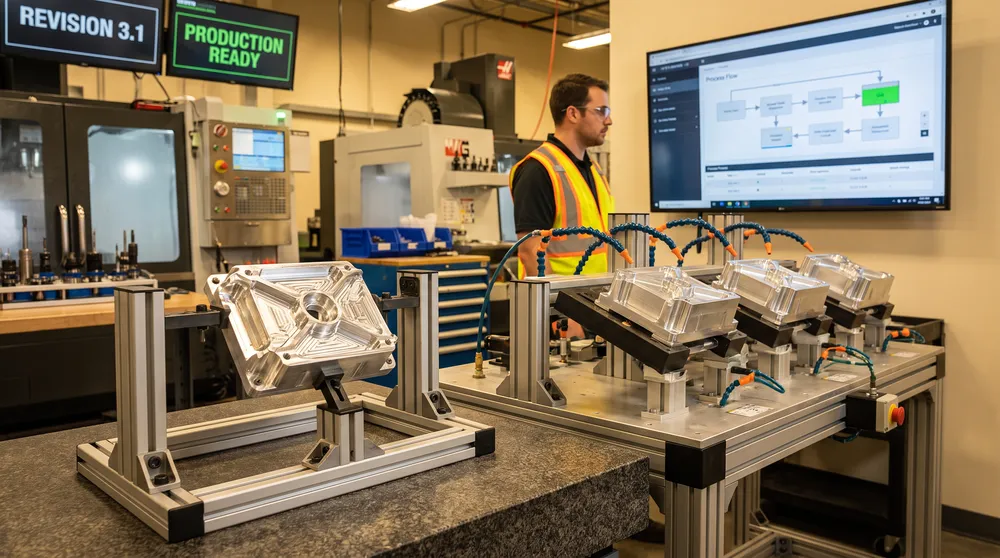
Are Revision Changes Confirmed?
A supplier should be clear about which drawing revision, CAD file, and requirement set are being quoted or manufactured.
Are Problems Explained Early?
Manufacturing problems are easier to manage when they are identified before parts are completed.
Technical communication should make risks visible early enough for the customer and supplier to respond.
Is There a Clear Technical Contact?
For complex projects, buyers should know who is responsible for technical questions and how changes will be communicated.
The goal is not constant communication.
It is clear, technically useful communication at the points where project decisions matter.
9. How Should You Compare CNC Machining Quotes?
Unit price alone does not tell you whether two CNC machining quotations are equivalent.
Before comparing price, confirm that the technical scope is aligned.
Check:
- Material
- Material grade
- Quantity
- Drawing revision
- Included tolerances
- Inspection scope
- Inspection documentation
- Surface finishing
- Secondary processes
- Packaging
- Lead-time assumptions
- Exclusions
- Special notes
One supplier may include finishing and inspection while another excludes them.
One quotation may use the latest drawing revision while another is based on an earlier file.
One supplier may include detailed measurement documentation while another includes only basic inspection.
This leads to an important sourcing principle:
Two prices are not directly comparable unless both suppliers are quoting the same technical scope.
The lowest number can become misleading if important requirements are missing.
For a detailed breakdown of machining cost drivers, see our CNC Machining Cost Guide.
10. How Should You Evaluate Lead Time?
Lead time should be evaluated as a manufacturing plan, not just as a date on a quotation.
A CNC machining project may include:
Technical Review → Material Preparation → Programming → Setup → Machining → Finishing → Inspection → Packaging
Some projects require fewer steps.
Others may include secondary processing, special tooling, detailed inspection, or customer-specific documentation.
The buyer should understand what is included in the quoted lead time.
A very short quoted delivery time is only valuable if the assumptions behind it are realistic.
Questions may include:
- Is material availability included?
- Is finishing included?
- Is inspection time included?
- Are special fixtures required?
- Does the quantity require multiple production runs?
- When does the lead time begin?
- Are approval steps required before production?
Reliable delivery depends on a realistic route, not simply an aggressive promise.
11. Should You Start With a Trial or Initial Order?
For a new supplier relationship, buyers may choose an initial project or qualification order before transferring larger recurring demand.
The appropriate approach depends on:
- Project risk
- Part complexity
- Quantity
- Critical tolerances
- Application
- Supply-chain strategy
- Internal qualification requirements
There is no universal sample quantity that fits every program.
The purpose of an initial order is to evaluate how the supplier performs under real project requirements.
Buyers may review:
- Dimensional conformity
- Surface condition
- Documentation
- Communication
- Packaging
- Schedule performance
- Drawing interpretation
- Response to technical issues
A successful initial project can provide useful evidence before a program moves into larger repeat-production demand.

Red Flags When Evaluating a CNC Machining Supplier
No single warning sign automatically disqualifies a supplier, but certain patterns deserve closer review.
Examples include:
- The quotation references the wrong drawing revision
- A complex project receives almost no technical review
- Tolerance assumptions are unclear
- Inspection scope cannot be explained
- Finishing scope is ambiguous
- Important changes are agreed only verbally
- Difficult features are accepted without discussing manufacturing assumptions
- Promised lead time appears disconnected from the production route
- Price comparisons ignore excluded operations
- The supplier cannot explain how a critical feature will be machined or inspected
The goal is not to find a supplier that never asks questions or never identifies risk.
In many cases, useful technical questions are a positive sign.
The goal is to understand whether the supplier recognizes the same risks that matter to your engineering team.
CNC Machining Supplier Evaluation Checklist
A structured checklist makes supplier comparison easier.
| Question | What You Are Checking |
|---|---|
| Can they manufacture my geometry? | Process fit |
| Do they work with my material? | Material experience |
| Can critical tolerances be controlled? | Precision capability |
| Can requirements be inspected? | Measurement capability |
| Do they understand the drawing? | Engineering competence |
| Is DFM feedback specific? | Manufacturing support |
| Does capacity match my quantity? | Production fit |
| Is quotation scope complete? | Commercial clarity |
| Are revisions controlled? | Project communication |
| Is lead time based on a realistic route? | Delivery planning |
This checklist should be applied to the actual project.
A supplier may perform strongly for one type of work and be less suitable for another.
What Should You Send When Evaluating a CNC Supplier?
A supplier can only evaluate what has been communicated.
For a meaningful technical and commercial review, provide as much relevant project information as possible.
Typical RFQ information includes:
- 3D CAD model
- Controlled 2D engineering drawing
- Drawing revision
- Material and grade
- Required quantity
- Critical tolerances
- GD&T
- Surface finish
- Secondary finishing
- Inspection requirements
- Required documentation
- Delivery requirement
- Relevant application information
The 3D model communicates geometry.
The 2D drawing communicates controlled engineering requirements.
Providing both reduces assumptions and helps the supplier evaluate tool access, setup strategy, inspection, finishing, and quotation scope more accurately.
Questions to Ask a CNC Machining Supplier Before Ordering
Before placing an order, consider asking:
- Which machining process would you use for this part?
- Are there any manufacturability risks in the drawing?
- Which tolerances require project-specific review?
- How will critical features be inspected?
- What is included in the quotation?
- Are surface finishing and secondary processes included?
- How will drawing revisions be controlled?
- Would the production strategy change at higher quantities?
- What information is still missing from the RFQ?
- What manufacturing assumptions is the quotation based on?
The supplier does not need to provide the same answer to every project.
What matters is whether the answers show a clear understanding of the technical requirements.
Frequently Asked Questions About Choosing a CNC Machining Supplier
How do I choose a CNC machining supplier?
Start by matching the supplier’s machining capability to your part geometry, material, tolerances, quantity, and inspection requirements.
Then evaluate drawing review, DFM support, quality control, communication, lead time, quotation scope, and readiness for repeat production.
What should I look for in a CNC machine shop?
Look for relevant process capability, material experience, feature-specific tolerance control, suitable inspection methods, clear drawing review, practical DFM feedback, reliable communication, and a production strategy that fits your quantity.
Should I choose the lowest CNC machining quote?
Not on price alone.
First confirm that each supplier is quoting the same material, drawing revision, finishing, tolerance, inspection, documentation, and quantity.
A lower price may reflect a different technical scope.
How can I verify a CNC supplier’s tolerance capability?
Ask the supplier to review the actual critical features on your drawing.
Tolerance capability should be evaluated together with part geometry, material, workholding, machining strategy, thermal stability, and inspection method.
Why is DFM important when selecting a CNC supplier?
DFM shows whether the supplier can identify manufacturing risks and explain how design decisions affect tooling, setups, stability, inspection, and cost.
Useful DFM feedback should preserve engineering function while reducing unnecessary manufacturing effort.
What information should I send before requesting a quote?
Where possible, provide a 3D CAD model, controlled 2D drawing, material and grade, quantity, critical tolerances, GD&T, finishing, inspection requirements, documentation needs, and target delivery information.
Should I test a new CNC supplier before repeat production?
Depending on project risk and sourcing strategy, an initial project or qualification order can provide evidence of dimensional conformity, communication, documentation, packaging, and schedule performance before larger recurring demand is transferred.
Summary
Choosing a CNC machining supplier requires matching manufacturing capability to the actual part. Buyers should evaluate process fit, tolerance control, inspection, DFM, communication, quantity, quotation scope, and realistic lead time—not unit price alone.
A structured supplier review reduces sourcing risk and makes technical and commercial comparisons more meaningful.
Evaluating a CNC Machining Supplier for Your Next Project?
Send your CAD model, engineering drawing, material, quantity, tolerance, finishing, and inspection requirements to YCS for a project-specific manufacturing review.