
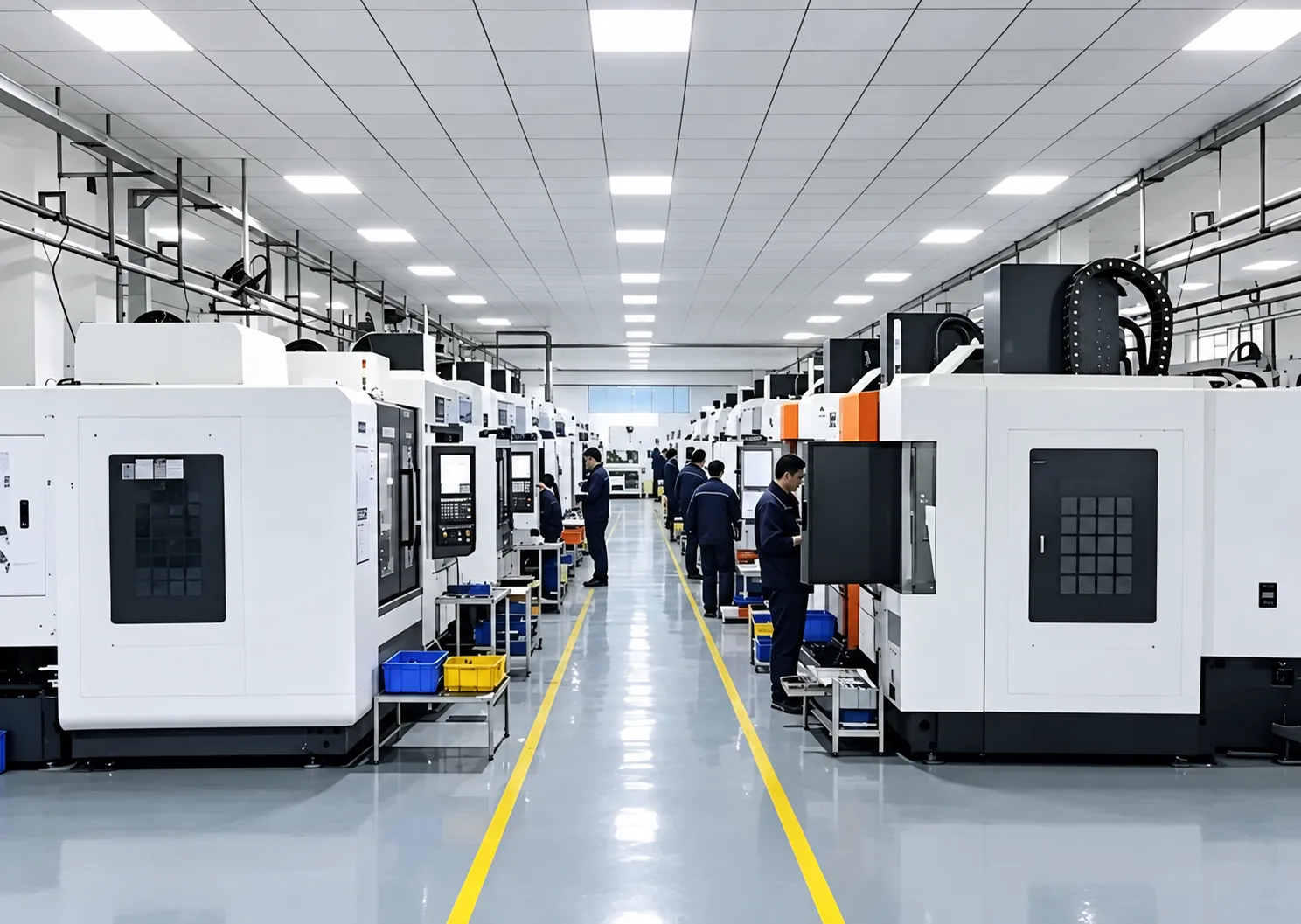
Engineering & DFM Support
Engineering & DFM Support for CNC Machining
Manufacturing review for custom CNC parts before production. YCS evaluates geometry, material, tolerances, tool access, setup strategy, finishing and inspection requirements so the process plan follows the actual functional drawing.
DFM at YCS
Manufacturing Review Before the Process Is Locked
A part can be technically machinable and still create unnecessary setup, long-tool, tolerance, finishing or inspection difficulty. DFM helps make those trade-offs visible before production begins.
DFM should not simplify a part at the expense of function. The purpose is to identify where manufacturing effort comes from, confirm whether that effort is justified, and clarify practical alternatives where they can improve the process without changing the engineering intent.
Review Scope
What We Review Before CNC Machining
The review follows the actual part rather than a generic checklist. The most important issues are the ones that affect tool access, stability, datum relationships, inspection and total manufacturing effort.
Deep pockets, small internal radii, undercuts, side features, long reach and areas where cutter or holder access may be restricted.
Thin walls, tall bosses, slender shafts or other geometry that may respond to cutting or clamping forces.
How many orientations may be required and whether critical features cross setup or datum-transfer boundaries.
Which requirements are functionally critical, which can use general tolerances, and how controlled features relate to the datum system.
Whether anodizing, plating, passivation, blasting, polishing or another specified finish affects critical dimensions or protected features.
Whether the critical features can be measured reliably and what inspection method fits the geometry and tolerance.
Drawing Review
Resolve Ambiguity Before It Reaches Production
A strong manufacturing review checks that the files and controlled requirements tell the same story. The goal is to reduce hidden assumptions before quoting and machining.
- Confirm 3D model and 2D drawing revision alignment
- Review material and grade requirements
- Identify conflicting or unclear tolerances and notes
- Review functional datums and critical feature relationships
- Clarify finish, inspection and documentation requirements
DFM Priorities
Common CNC Design Questions We Evaluate
| Design Question | What We Review | Why It Matters |
|---|---|---|
| Can the cutter reach the feature? | Tool access, holder clearance, feature depth and machining direction | Restricted access may require long tools, extra setups or another process |
| Are internal corners practical? | Radius, depth, cutter diameter and surrounding geometry | Small radii in deep features can drive small-tool and long-reach requirements |
| Are walls or bosses too flexible? | Thickness, height, support, material removal and clamping | Flexible features can be more difficult to machine and measure consistently |
| Are tolerances assigned by function? | Fits, sealing, alignment, position, form and datum relationships | Unnecessary precision can add process and inspection effort without improving function |
| Can setup count be reduced? | Feature orientation, multi-face access and datum transfer | Fewer suitable setups can simplify handling and preserve feature relationships |
| Can critical features be inspected? | Measurement access, datum setup, feature type and reporting need | A feature that cannot be verified reliably can create acceptance ambiguity |
Process Selection
Choose the Simplest Reliable Manufacturing Route
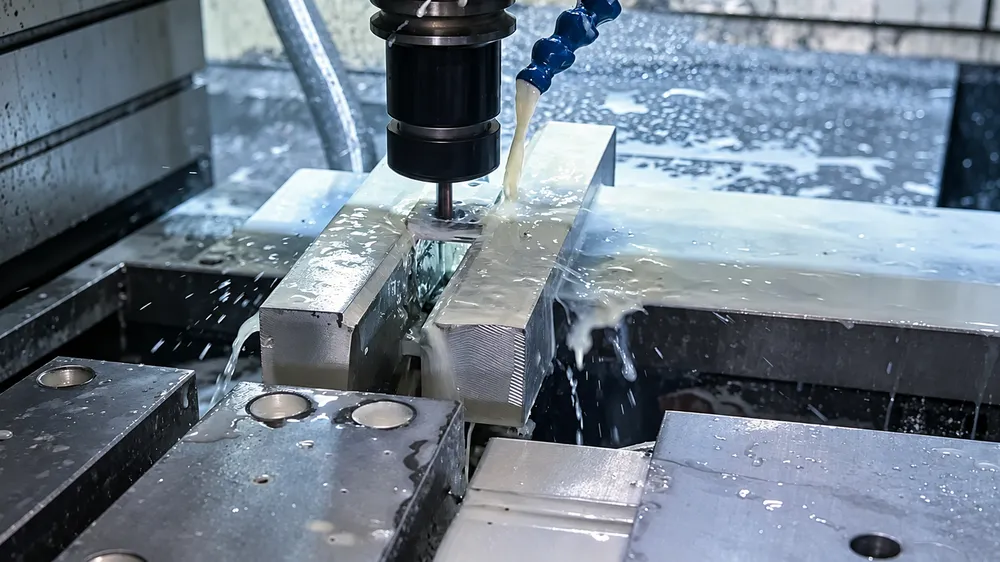
DFM is also process selection. A feature should not be pushed onto a more complex machine simply because that machine exists. The route should match the geometry and functional requirements.
- CNC milling for accessible prismatic geometry and multi-face features where appropriate
- CNC turning for rotational components and functional diameters
- 5-axis machining where additional orientation reduces setup or improves tool access
- EDM where conductive-material geometry is difficult to produce with conventional cutting tools
Tolerance Strategy
Apply Precision Where the Part Actually Needs It
The tightest tolerance is not automatically the best tolerance. DFM helps separate function-critical features from dimensions that can use a broader general requirement.
Critical bores, journals, fits, mating faces, hole positions and sealing or alignment features should be reviewed in their functional context.
Less critical geometry can often remain under an appropriate general tolerance instead of receiving individual tight values everywhere.
The tolerance and the intended inspection method should make sense together for the geometry and acceptance requirement.
For suitable features and projects, YCS can support tolerances as tight as ±0.005 mm, depending on part geometry, material, machining process and inspection requirements. This is a project-specific capability and is not a default tolerance for every feature.
Inspection Planning
Design Features That Can Be Verified Reliably
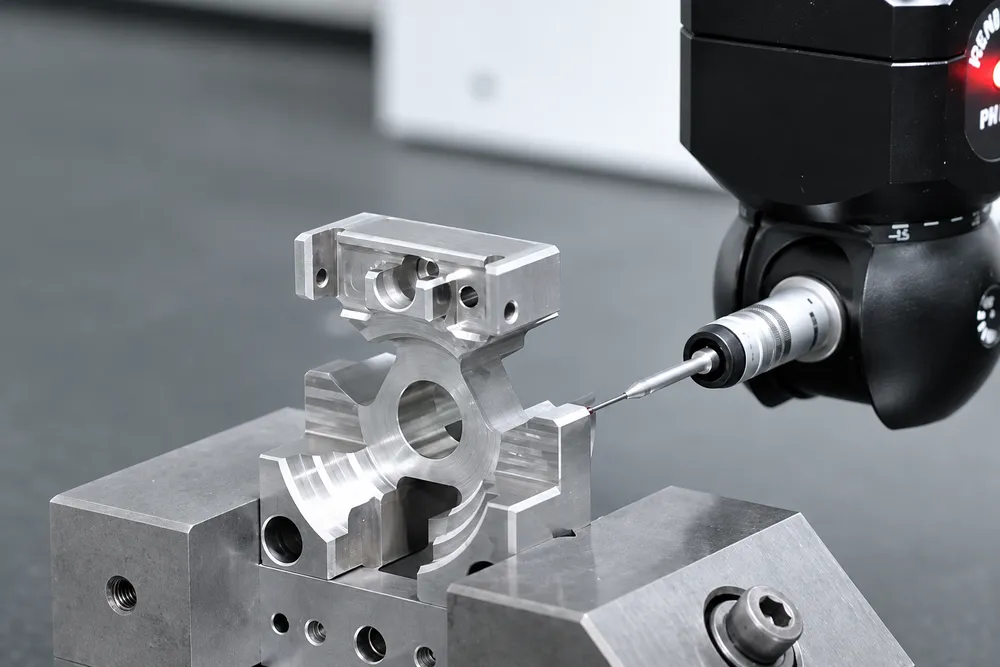
Manufacturability is incomplete if the critical requirement cannot be inspected with confidence. DFM should consider measurement access before the project reaches final inspection.
- Identify the features that control assembly or performance
- Confirm the datum strategy supports the intended measurement
- Review whether the feature can be accessed by the selected measurement method
- Define dimensional reports or special documentation before quotation when required
Cost & Production
DFM Should Reduce Unnecessary Effort, Not Necessary Function
Manufacturing cost is created by the complete route: material, setup, tooling, machining time, tolerances, finishing, inspection and quantity. A useful DFM review targets effort that does not improve the required function.
Where suitable, feature orientation and datum planning may reduce repositioning or special fixture requirements.
More accessible geometry or larger practical radii can sometimes allow more rigid tooling and a simpler machining route.
Applying tight requirements only to functional features can avoid unnecessary finishing and inspection work.
Prototype and repeat-production quantities may justify different workholding, tooling and inspection strategies.
Critical post-finish dimensions, masking and protected features should be defined before quotation.
Reports, CMM work or customer-specific documentation should be included in the RFQ when required.
Workflow
How a CNC DFM Review Fits Into the Project
CAD & Drawing
Review current revision, material, quantity and controlled engineering requirements.
Manufacturability
Evaluate tool access, geometry, rigidity, setups, datums, finishing and inspection.
Technical Questions
Make important assumptions or conflicts visible before the manufacturing route is fixed.
Process Route
Select the practical machining, workholding and inspection strategy for the project.
Manufacturing
Move into machining with a clearer technical scope and controlled revision.
What Good DFM Looks Like
Specific Feedback Is More Useful Than Generic Advice
Useful DFM explains the manufacturing reason behind a concern and gives the engineering team enough information to decide whether a change is appropriate.
| Less Useful | More Useful DFM Feedback |
|---|---|
| “Simplify this pocket.” | “This deep pocket requires long-reach tooling; increasing tool access or revising the depth/radius relationship may improve rigidity if the function allows.” |
| “Tolerance is too tight.” | “This tolerance is applied to a flexible wall and may require additional process control; confirm whether the full value is functionally necessary.” |
| “Use 5-axis.” | “This part has critical features on several faces; 5-axis should be evaluated because it may reduce repositioning and datum transfer.” |
| “We cannot inspect this.” | “The feature is difficult to access with the planned measurement method; consider inspection access or clarify the acceptance method before production.” |
Request a Manufacturing Review
What to Send for CNC DFM Support
A complete technical package helps the review focus on the actual functional and manufacturing requirements.
Recommended Project Information
- Current 3D CAD model
- Controlled 2D drawing
- Material and grade
- Required quantity
- Critical tolerances and GD&T
- Surface finish / secondary processing
- Inspection requirements
- Relevant application or functional notes
FAQ
Engineering & DFM Support FAQ
What is DFM for CNC machining?
Does DFM mean changing the design?
Can DFM reduce CNC machining cost?
When should DFM happen?
What files should I send for a DFM review?
Does YCS provide DFM only for production orders?
Engineering & DFM Support
Send Your CNC Part for Manufacturing Review
Share your CAD model, controlled drawing, material, quantity, tolerances, finishing, inspection and functional requirements. YCS will review manufacturability and the practical process route before production.
Price, lead time and the final manufacturing route are confirmed after drawing and project review.
RFQ Form
Tell Us About Your CNC Part
Send the essential project information first. Detailed requirements can also be included in your drawing.